





Africa, where most people support equal rights for women, is still struggling to protect women from violence, exposing a gap between what citizens believe and what institutions are willing or able to deliver.
Development Diaries reports that Afrobarometer’s 2026 survey across 39 African countries found overwhelming public support for gender equality and stronger protections for women.
In more than two-thirds of the countries surveyed, citizens said there was no justification for a man to use physical force against a woman, with cultures, religions, and political systems supporting equal rights and opportunities for women, emerging as the majority view across different regions.
However, in 22 of the 39 countries, the same survey uncovered that more than half of respondents believed that women who report gender-based violence are likely to face criticism, harassment, or social stigma from their communities.
Rather than contradicting public support for gender equality, this finding reveals that citizens may believe women deserve equal rights, but many have little confidence that the institutions responsible for protecting those rights will actually do so when it matters.
Laws without protection
The Afrobarometer findings arrive against a backdrop of alarming developments across the continent, where governments continue to announce commitments to women’s rights while violence persists and justice remains elusive.
In Kenya, the country continues to record an average of eight femicide cases every week, with official figures showing that 529 women were killed in 2024 alone, a number that increased despite the existence of the Protection Against Domestic Violence Act, the establishment of a presidential working group on femicide, and repeated promises by senior government officials to tackle the crisis.
In Nigeria’s Borno State, authorities recorded 531 sexual and gender-based violence cases between June 2025 and April 2026 in the central region alone.
Many of those cases remain stuck in the court system, while others are still awaiting arrests or investigations. For survivors, the existence of legal protections means little when cases remain unresolved months or years after they are reported.
South Africa provides another illustration of the gap between legislation and implementation. This month, a parliamentary committee revealed that 1,853 child rape cases were withdrawn between 2020 and 2025.
More than half of those cases collapsed because DNA laboratories failed to process evidence on time, rape kits were unavailable, and police officers allowed withdrawals in situations where the law explicitly prohibited them.
Meanwhile, in Ghana, lawmakers continue to advance legislation that would criminalise LGBTQ identity, even as the country hosts international conversations about human dignity, equality, and justice. The contrast highlights a recurring pattern across the continent.
Although each country’s circumstances differ, the broader pattern is difficult to ignore, as citizens increasingly support gender equality, legal frameworks already exist, and governments routinely express commitment to protecting women.
Where systems break
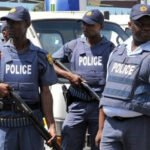
One of the most significant failures lies within policing systems, as across many African countries, the number of officers trained to investigate sexual and gender-based violence remains far below what existing caseloads require.
Survivors are understood to often report violence to officers who have received little or no training in handling trauma, collecting evidence in sexual violence cases, or understanding their legal obligations when receiving complaints.
The consequences become visible long before cases reach court, with delayed investigations, poorly documented evidence, insensitive treatment of survivors, and weak case preparation often undermining prosecutions before they even begin.
Another challenge is the prosecution stage, where conviction rates for gender-based violence offences remain significantly lower than reporting rates. At the same time, reporting rates themselves are widely believed to represent only a fraction of actual incidents.
South Africa’s experience demonstrates how institutional weaknesses can destroy cases before judges ever have the opportunity to hear them. And when rape cases collapse because forensic evidence is delayed or unavailable, survivors receive a powerful message about the value the system places on their suffering.
Support services are equally inadequate. In most African countries, the number of functioning shelters falls far below the level required to meet demand. Women escaping abusive relationships frequently face a devastating choice between returning to unsafe environments or confronting homelessness, poverty, and social isolation.
This reality explains why many survivors remain trapped in situations they desperately want to leave.
Another problem lies in how governments classify violence itself. In many countries, including Kenya, femicide is not recognised as a distinct criminal category. So, when gender-motivated killings are recorded simply as homicides, governments lose the data necessary to understand the scale and specific characteristics of the problem.
Following the money
The way governments allocate resources reveals their priorities more clearly than public speeches ever can.
Across the continent, specialised units investigating economic crimes frequently receive significantly more resources than units handling sexual and gender-based violence. Advanced forensic tools, digital investigation capabilities, and specialised training are routinely funded for financial crime investigations, while DNA laboratories handling sexual violence evidence remain overwhelmed.
South Africa’s forensic backlog is one example. The crisis reflects years of insufficient investment in systems that directly affect survivors’ access to justice.
Those most affected
Women in rural communities often face the greatest obstacles because they have limited access to legal aid organisations, specialised support services, and well-resourced police stations.
Women living in conflict-affected regions like Borno State, the eastern Democratic Republic of Congo, and Mozambique’s Cabo Delgado Province face even greater risks, as violence occurs within environments where already fragile protection systems have been weakened further by insecurity.
Also, women with disabilities encounter barriers, as police stations and court buildings are often physically inaccessible just as sign language interpretation remains scarce.
Rights and reality
The Maputo Protocol requires states to take effective measures to prevent, punish, and eliminate violence against women. It also requires governments to provide access to justice, legal assistance, shelter, medical services, and rehabilitation.
Similarly, international human rights standards place clear obligations on governments to investigate violence, prosecute offenders, and support survivors.
But when femicide rates rise, conviction rates stagnate, and support services remain inadequate, governments are failing commitments they have already accepted under regional and international law.
What must change
Governments should begin by measuring the gap between commitments and outcomes. Police response times, prosecution rates, conviction rates, shelter availability, forensic capacity, and budget allocations should all be publicly tracked and independently assessed.
Citizens, civil society organisations, and national human rights institutions should use the Afrobarometer data as evidence whenever governments attempt to explain implementation failures as cultural problems.
What remains unresolved is whether governments are prepared to build institutions capable of delivering what citizens already believe women deserve.
Photo source: UNFPA