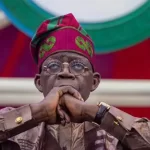





The reported attempt by the Department of State Services (DSS) to compel X (formerly Twitter) to delete Omoyele Sowore’s critical post against President Bola Tinubu represents a troubling pattern of shrinking civic space in Nigeria.
Development Diaries reports that the DSS recently wrote to X Corp, parent company of X (formerly Twitter), to deactivate the account of activist Omoyele Sowore within 24 hours.
In a letter to X Corp, the DSS claimed a post Sowore made about President Bola Tinubu posed a threat to national security.
Section 39(1) of the 1999 Constitution (as amended) guarantees every Nigerian the right to freedom of expression, including ‘to receive and impart ideas and information without interference’.
This provision is clear that opposition voices, even when uncomfortable for those in power, is not only legal but a cornerstone of democratic governance.
State security agencies undermine the very constitutional order they are sworn to protect when they move to silence such dissent opposition voices.
Amnesty International, in its condemnation of this development, highlights how this demand also breaches Nigeria’s obligations under regional and international law.
As a signatory to the African Charter on Human and Peoples’ Rights and the International Covenant on Civil and Political Rights, Nigeria is bound to uphold citizens’ rights to free expression and privacy.
These obligations do not vanish because the speech in question is critical of the government. On the contrary, the essence of these protections is to ensure that those in authority are subject to scrutiny, debate, and even harsh criticism without resorting to intimidation or censorship.
Also, Socio – Economic Rights And Accountability Project’s (SERAP) warning is equally critical, particularly in light of Nigeria’s past experience with restrictions on Twitter.
Any move to ban or restrict access to X would not only punish Sowore but also impose a form of ‘collective punishment’ on millions of Nigerians who rely on the platform for information, activism, and commerce.
The Economic Community of West African States (ECOWAS) Court of Justice has already affirmed that access to platforms like Twitter is tied to fundamental rights, emphsasing the legal and moral obligation of the government to avoid such draconian steps.
A ban or suppression of voices online would send a chilling signal that Nigeria is sliding toward authoritarianism under the guise of maintaining ‘national security’.
This development must therefore be treated as a red flag.
Development Diaries calls on President Tinubu to order the DSS to withdraw its request immediately and ensure that security agencies do not weaponise their authority to police speech.
For the sake of Nigeria’s democratic future, the Tinubu government must choose the path of protecting rights, not curtailing them.
Photo source: Yele Sowore