






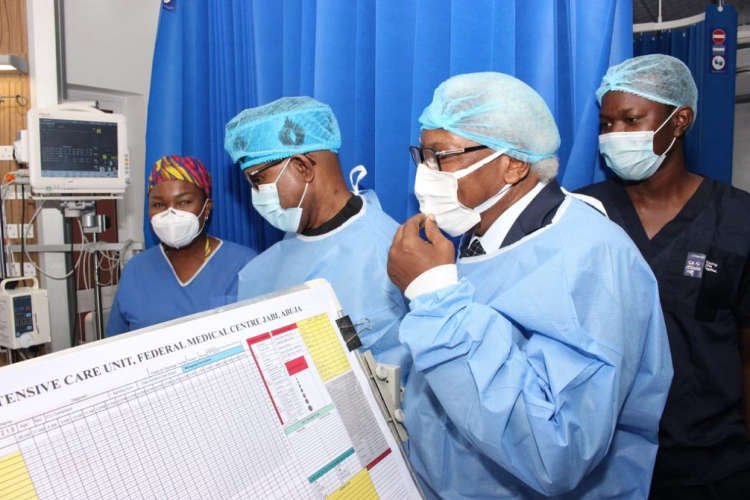
By the time a young woman, Ifunanya Nwagene, was rushed into the Federal Medical Centre (FMC) in Abuja with a snakebite, panic had already done what panic always does in Nigeria.
Sadly, hours later, she was gone.
By the next day, the tragedy had split into two competing versions: one carried by a family and the social media public, heavy with suspicion; the other carried by the hospital, heavy with clinical detail and institutional defence.
According to FMC Jabi, Ifunanya was given polyvalent antivenom, oxygen, fluids, and resuscitation, but the neurotoxic effects of the envenoming progressed too quickly.
They insisted that antivenom was available.
But Nigerians, shaped by years of ‘no bed space’, ‘buy your drugs outside’, and ‘we don’t have light’, did not believe that statement. And honestly, can you blame them?
This is what happens when distrust becomes a national inheritance. Even when the clinicians may have done their best, the system’s long record of failure means people no longer believe the difference between tragedy and negligence.
So the real question to ask would be ‘who is lying’?
Nigeria’s emergency care governance is the culprit here, particularly when it comes to time-sensitive conditions like snakebites.
The World Health Organisation (WHO) classifies snakebite envenoming as a major global health burden, with millions bitten and over a hundred thousand deaths yearly.
Africa alone needs treatment for nearly half a million cases every year. This is a predictable, persistent public health problem, and one that Nigeria treats as an afterthought.
Part of the failure lies in the country’s broken ‘chain of survival’. Even when a hospital responds appropriately, the outcome may already be compromised long before the patient gets to the ward.
How long did it take to move Ifunanya from the bite to facility? Was there a functional ambulance? Was she supported with oxygen early, long before the crisis escalated? Did the hospital have the critical care capacity needed when neurotoxicity set in?
Then there is the issue of antivenom. Are stocks predictable or always ‘we will check’? Are antivenoms validated for the species present in the region? Can the poorest citizens seek care without first calculating whether they can afford the bill? A hospital statement can be accurate and still fall short of answering any of these governance questions.
And, as always, the communication gap widens the wounds. Once someone dies and allegations begin to swirl online, Nigerian institutions tend to respond with stiff, defensive statements that read more like reputation management than transparent disclosure.
In a country where people have seen too much, that tone does not calm anyone. It fuels conspiracy, widens distrust, and leaves families feeling dismissed rather than informed.
Beyond the medical facts, this is also a rights issue. The right to health is not fulfilled by sympathy or posthumous explanation; it is fulfilled by reliable emergency care, functional equipment, trained staff, and swift communication.
It is a dignity issue, too, because families deserve clarity and empathy, not bureaucratic detachment. And it is a governance issue above all else, because a country that cannot reliably treat a snakebite is suffering from weak capacity.
Snakebite does not strike evenly. Rural communities, low-income households, and peri-urban families face the highest risk. Women often shoulder the hidden burdens, including the emergency transport, the caregiving, and the financial loss.
If a snakebite emergency results in controversy and death in Abuja, what hope exists for communities with no ICU, no oxygen, and no trained responders?
The bottom line is that emergencies are public tests of state capacity, and Nigeria is failing far too many of those tests.
What needs to happen now is not guesswork or social media warfare, but clarity. FMC Jabi should publish a verifiable timeline showing arrival time, vitals, interventions, timing of antivenom, and what constrained ICU access.
An independent case review should follow, led by a professional body and summarised publicly.
As for the government, it should treat snakebite like the public health priority WHO says it is by mapping high-risk areas, designating fully equipped treatment centres, defining referral pathways, and fixing supply chains.
Hospitals should adopt rapid transparency as policy, and regulators must end the era where emergency care depends on luck, connections, or social media outrage.
A country that cannot manage a time-critical medical emergency cannot call itself prepared for anything larger. Development Diaries will continue to track these cases to expose the governance failures that turn emergencies into tragedies.
Photo source: FMC Abuja/File