






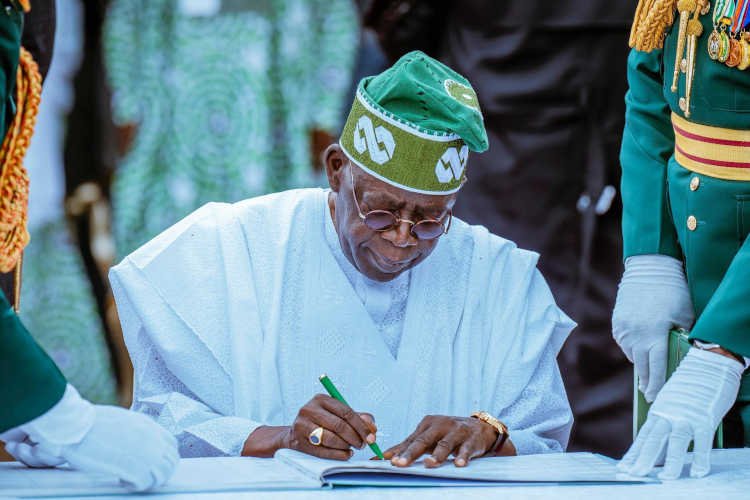
The reversal of President Bola Tinubu’s controversial pardon list has once again raised serious questions about how decisions are made at the highest level of government.
Development Diaries reports that after public backlash, the federal government has officially withdrawn the controversial pardon earlier granted to Maryam Sanda and several convicts of serious crimes, including drug traffickers, kidnappers, and corrupt officials.
It is understood that the president approved a revised and final list of 120 beneficiaries of the presidential prerogative of mercy, drastically reducing the initial 175 names earlier publicised.
Those delisted include convicts for murder, corruption, kidnapping, human trafficking, and drug-related offences.
To the government’s credit, the eventual decision to reverse the controversial pardons shows some level of responsiveness to public outcry, which is commendable.
In a democracy, leaders are expected to listen, and the administration did just that after Nigerians spoke with one voice against the moral and legal absurdity of freeing convicted criminals.
However, commendation must be balanced with caution.
The reversal also shows a disturbing pattern of policy missteps that continue to erode public confidence in governance, and it also exposes the weakness of internal review mechanisms and the lack of coordination within the administration.
Unfortunately, this is not an isolated incident. The Tinubu administration’s growing reputation for reversals, from key appointments to major policy announcements, has become a recurring theme that suggests more reaction than reflection in governance.
According to a report by The Guardian, President Tinubu has annulled or amended several high-profile appointments since coming to power due to eligibility issues, political backlash, inadequate consultation, security concerns, or procedural breaches.
Public records show at least eight instances in which Tinubu’s appointments or nominations have been withdrawn, revised or reissued since mid-2023.
This inconsistency undermines citizens’ trust in their leaders’ judgement. Decisions made in haste and retracted under pressure create the impression of a government struggling to think before it acts.
Going forward, there must be accountability. Those who compiled and approved the initial pardon list from the Presidential Advisory Committee on Prerogative of Mercy should be thoroughly investigated and sanctioned to set a clear example that incompetence in public service carries consequences.
More importantly, the presidency must strengthen internal consultation and ensure that future acts of clemency are transparent, evidence-based, and in line with justice and public morality.
Nigerians deserve a government that leads with clarity, not one that stumbles from one correction to another.