
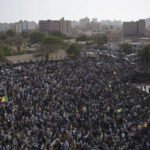


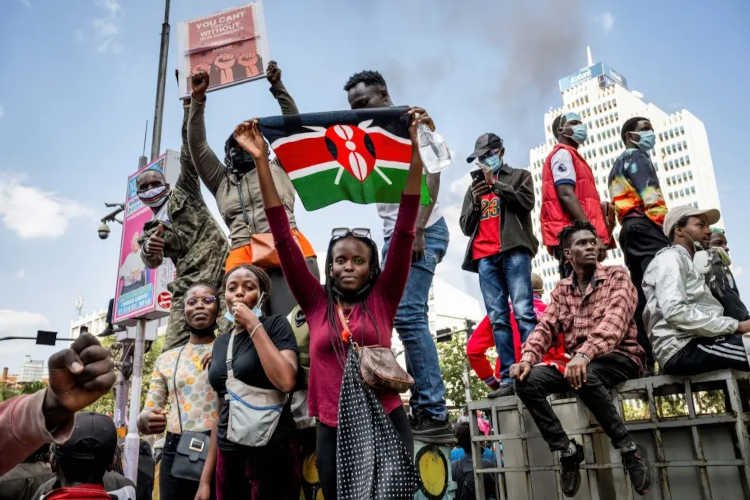
As the people of Kenya took to the streets to mark Saba Saba Day, which is a symbol of their long struggle for democracy, the government responded with bullets, batons, and brute force, betraying the very ideals the day was meant to honour.
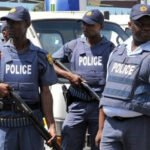
Development Diaries reports that the National Police Service (NPS) has confirmed 11 deaths, 567 arrests, and dozens of injuries during Monday’s protests amid condemnation over excessive use of force.
These figures, as announced by the police, signal something far more dangerous: the erosion of constitutional protections and the weaponisation of state power against its own citizens.
Civil rights groups, including the Kenya National Commission on Human Rights (KNCHR), have exposed damning evidence that the police not only used lethal force against protesters but did so in defiance of court orders.
It is essential to acknowledge that the police do have a legitimate role in maintaining public order. However, this role is governed by law, not by impulse or unofficial ‘orders from above’, as disturbingly stated by Interior Cabinet Secretary Kipchumba Murkomen in a now-viral video.
His directive to shoot protesters deemed ‘threatening’ is unconstitutional and criminally irresponsible.
Under Article 244 of the Kenyan constitution, the police are required to ‘respect human rights and fundamental freedoms and dignity’.
Moreover, Article 37 guarantees every Kenyan ‘the right, peaceably and unarmed, to assemble, to demonstrate, to picket, and to present petitions to public authorities’.
By deploying live ammunition, abducting citizens, and working alongside criminal gangs, the police violated domestic law and Kenya’s international obligations under the International Covenant on Civil and Political Rights (ICCPR) and the African Charter on Human and Peoples’ Rights, both of which Kenya is party to.
Also, the government’s approach sends a chilling message: dissent will be met with violence. But in a democracy, dissent is not a threat. It is a civic duty.
When citizens are brutalised for protesting against policies that affect their daily lives, such as the controversial Finance Bill, the state is suffocating democracy, not protecting it.
This crackdown is not an isolated incident, as It follows a disturbing pattern of protest-related killings, enforced disappearances, and attacks on human rights defenders and journalists.
The attack on KHRC’s offices and the increasing harassment of the press further confirm the fear that the country’s civic space is rapidly shrinking.
It is clear that this brutal suppression is designed to break the spirit of civic participation, particularly among Kenya’s youth, who have been at the forefront of recent protests.
But history teaches us that when governments silence citizens instead of listening to them, discontent festers underground and trust in democratic institutions collapses.
Democracy cannot survive on elections alone. It demands accountability, participation, and the protection of civil liberties between election cycles. The state’s current posture undermines these critical democratic pillars.
To restore public trust and honour Kenya’s constitutional and international obligations, the goverment needs to conduct an immediate and independent investigation into the killings, abductions, and police abuses reported during the Saba Saba protests, with public disclosure of findings and prosecution of those responsible.
Also, there must be compensation and medical support for victims and families of police violence; just as we call for reforms within the NPS to ensure command responsibility, accountability, and alignment with human rights standards.
The government must recognise that brutality will not quell the call for justice; it will only amplify it.