




Ghana’s reputation as West Africa’s democratic reference point is being quietly tested by a steady mix of ‘false news’ arrests, attacks on journalists, and a silence from institutions that should be speaking up.
Development Diaries reports that CIVICUS has downgraded Ghana’s civic space rating from ‘narrowed’ to ‘obstructed’, citing rising physical attacks on journalists and the growing use of vague ‘false news’ laws to detain reporters and commentators.
For over three decades, Ghana has been the country people across the region pointed to when they needed proof that democracy could work in West Africa, whether in conversations in the Ivory Coast, advocacy efforts in Togo, or reform debates in Mali.
That is why this downgrade matters, because it is about a country that once set the standard now beginning to blur the line between openness and restriction, and doing so at a time when the region has fewer democratic examples to lean on.
What has changed is not that Ghana suddenly became hostile to press freedom overnight, but that the pattern has shifted from occasional pressure to something that feels more deliberate, with journalists now threatened with lawsuits and facing physical attacks.
The use of ‘false news’ provisions is where the issue becomes both legal and political, because the law does not clearly define what counts as falsehood, does not require strong proof of intent, and leaves enough room for interpretation that it can easily become a tool for managing criticism rather than addressing misinformation.
In practice, this creates a situation that would almost be amusing if it were not so serious, where a journalist reports something uncomfortable, authorities decide it is ‘false’, and the burden quietly shifts to the journalist to prove their innocence in a process that was never clearly defined to begin with.
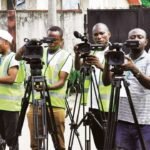
At the same time, attacks on journalists introduce a more direct form of pressure, because when physical harm enters the picture, and perpetrators are not held accountable, the message spreads quickly across newsrooms that some stories now come with personal risk attached.
This is where institutions are expected to step in, yet the response has been noticeably quiet, with bodies like the Economic Community of West African States (ECOWAS) and the African Union’s human rights mechanisms yet to apply visible pressure or even formally engage the issue, leaving the impression that what should trigger regional concern is being treated as a domestic inconvenience.
The silence matters because Ghana has never been just another country in the regional democratic conversation, as its openness has long served as evidence that press freedom and political stability can coexist, and when that example begins to weaken, the argument for reform in more restrictive environments also loses strength.
Across Africa, where the majority of countries already operate within limited or restricted civic space, the number of places that can genuinely claim openness is shrinking, and Ghana’s downgrade reduces an already small pool of reference points that activists, journalists, and reformers rely on to make their case.
The consequences are not evenly felt, as journalists outside Accra, particularly in northern regions where resources are limited and institutional support is weaker, face greater exposure, while women journalists deal with an added layer of gender-based harassment that makes an already difficult profession even more precarious.
Civil society organisations working on sensitive issues such as corruption, land rights, and extractive industries also find themselves navigating a tighter space, where the risk is not always a direct ban but a gradual increase in legal and informal pressure that makes certain kinds of work harder to sustain.
Legally, Ghana’s own constitution is clear in protecting freedom of expression and media independence, and regional frameworks like the African Charter on Human and Peoples’ Rights reinforce those commitments, making the current situation less about the absence of standards and more about how those standards are being applied in practice.
What this moment reveals is not a collapse but a drift, and drift is often more dangerous because it happens quietly, without the kind of dramatic events that force immediate attention, allowing restrictions to grow gradually until they begin to feel normal.
The CIVICUS downgrade is not the conclusion of a story, but an early warning, and whether Ghana remains a reference point or becomes just another example of shrinking civic space will depend on how quickly its institutions, citizens, and regional partners decide that silence is no longer an option.
Photo source: The Guardian Nigeria (file)