




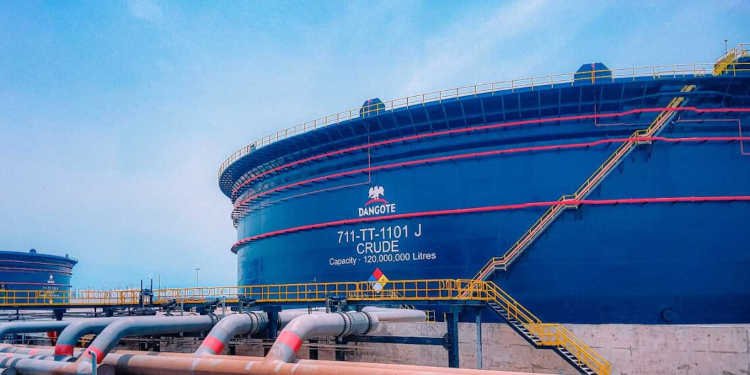
Dangote Refinery is giving ordinary investors a chance to own a piece of one of Africa’s biggest industrial projects, but anyone buying its shares for the first time needs to understand what ownership actually means before putting money into the offer.
Development Diaries reports that Dangote Petroleum Refinery and Petrochemicals FZE is offering 4.1 billion shares at N525 each, with a minimum subscription of ten shares, in what is expected to become the continent’s largest initial public offering (IPO).
The offer gives ordinary Nigerians an opportunity to become part-owners of a major African industrial company through the Nigerian Exchange.
For someone who has never bought shares, owning a share means more than putting money into a popular company and waiting for the price to rise as though the stock market has a standing appointment with your bank account.
A share represents a stake in the company, so its value can rise or fall with the company’s performance and market conditions, dividends are not guaranteed, and an investor can generally sell the shares after they begin trading on the Nigerian Exchange.
Dangote Refinery’s retail incentive gives investors an additional reason to hold on to their IPO shares because eligible buyers who subscribe to at least ten shares and keep them continuously for 12 months can receive one additional share for every ten held, with another additional share available after a further 12 months.
The two-year period therefore works as a holding incentive rather than a restriction on selling, rewarding eligible IPO subscribers who maintain their shares for the required period with additional shares.
In other words, the founder of the refinery, Aliko Dangote, is encouraging patience, not putting a padlock on the investment. It is understood that he is using the offer to broaden the company’s ownership, and there is considerable public interest in that ambition.
The opportunity therefore deserves to be explained in the same plain language as the invitation because a prospective investor should understand how the refinery makes money, what can affect its earnings, how dividends work, why share prices move and what happens when an investor wants to sell.
Refinery economics
Refinery earnings depend partly on the crack spread, the difference between the cost of crude and the price of refined products, with global oil prices, feedstock supply, foreign exchange movements and Nigeria’s fuel-pricing environment all affecting that margin.
The company’s expansion plans also form part of what investors are buying into, as Dangote intends to increase refining capacity from about 700,000 barrels per day to 1.4 million barrels per day by 2028.
If that expansion succeeds, it could change the scale of the business and its position in African petroleum markets.
So the investor needs enough information to understand what could increase or reduce the company’s earnings and how those changes could affect the value of the investment.
This is where the Securities and Exchange Commission (SEC) comes in, with the commission, which approved the offer, already warning prospective investors to read the prospectus and use approved subscription channels, particularly as the popularity of the offer creates opportunities for fraudsters to impersonate the company or its agents.
A plain-language retail summary could explain the minimum investment, the difference between capital gains and dividends, the possibility of losing money, the risks specific to refining and the practical steps for selling shares after listing. Nobody should need a finance degree before understanding what happens to the N5,250 they are about to put into a company.
Financial literacy
Relevant organisations can take the explanation further in Hausa, Yoruba, Igbo and Nigerian Pidgin to ensure that a market trader in Lagos is able to understand the same basic investment information as a professional investor reading the full prospectus.
The same principle applies to savings groups, such as Ajo, esusu, susu, chamas and stokvels, across Africa as they bring together contributions from people who may have different financial needs and different tolerance for investment risk.
A treasurer should therefore obtain the members’ agreement before placing pooled savings into a share and should consider when members may need their money back. An Ajo contribution can have ten different household priorities waiting for it, so nobody should discover the investment strategy only after the group needs cash for school fees or a medical bill.
The low entry price also makes it easier for people to participate gradually rather than committing money they may need for immediate household expenses. Buying fewer shares does not remove investment risk, but it can allow a first-time investor to learn how the market works without treating one investment as the household’s entire financial plan.
The refinery’s size
Nigeria’s unreliable public refineries have left the country heavily dependent on imported refined products for years. A successful Dangote expansion could reduce that dependence, while its growing market share will require regulators to continue monitoring competition and consumer interests.
The Federal Competition and Consumer Protection Commission (FCCPC) has powers under the Federal Competition and Consumer Protection Act 2018 to address abuse of dominance, while the Nigerian Midstream and Downstream Petroleum Regulatory Authority (NMDPRA) regulates the downstream petroleum sector under the Petroleum Industry Act 2021.
Those regulatory roles should complement the IPO rather than cast a shadow over it because investors need confidence that the market in which their company operates will remain properly regulated, while the company should be able to compete and expand within clear rules.
The promise of broader Nigerian ownership can also be measured after the listing. The Nigerian Exchange should publish retail participation data, including ticket size and state, so Nigerians can see how widely ownership has actually spread rather than discovering that the much-advertised public participation was concentrated among people who already know their way around the market.
Accessibility should form part of that effort, too, with public-offer information provided in accessible formats for persons with disabilities and in language that first-time investors can understand.
Anyone considering the offer should understand that buying a share means taking a stake in the company, with the possibility of earning dividends or benefiting from a rise in the share price alongside the possibility of losing money if the business or market performs poorly.
Dangote has opened the door to an investment opportunity that many Nigerians may never have considered before. The responsibility now is to ensure that people walking through that door understand the investment well enough to make their own informed decisions.