



The continued violence and repression across Central Africa reflect a serious failure of governments to protect their people and uphold basic rights.
Development Diaries reports that Human Rights Watch (HRW) has revealed in its World Report 2026 that abuses against civilians by government forces and armed groups have become rampant in the conflict in the eastern Democratic Republic of Congo.
According to the report, the governments of Rwanda, Burundi, Congo, and the Central African Republic have further restricted civil and political rights.
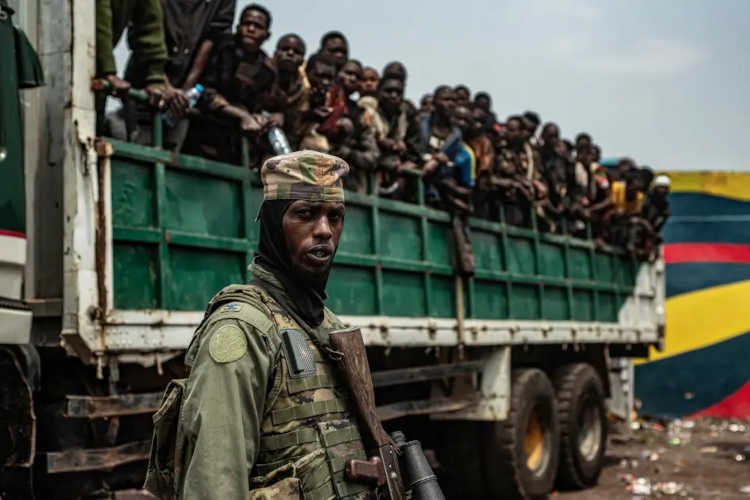
The report paints a troubling picture of Central Africa, especially in eastern Democratic Republic of the Congo, where civilians are trapped between government forces and armed groups.
According to the report, abuses such as killings, sexual violence, and forced displacement have increased as fighting continues between the Rwandan-backed M23 group and Congolese forces.
These acts violate basic human rights and international humanitarian law, which requires all parties in a conflict to protect civilians and prevent attacks on non-combatants.
The report also raises serious concerns about war crimes committed by multiple actors, as HRW documented abuses by the M23 and by the Congolese army, its Wazalendo allies, and other armed groups.
Under international law, including the Geneva Conventions, both state and non-state actors are obligated to avoid targeting civilians and to hold their fighters accountable.
The repeated nature of these crimes shows a failure of command responsibility and weak enforcement of the rule of law.
Beyond the conflict in Congo, civil and political rights are shrinking across the region. In Burundi and the Central African Republic, elections were marked by intimidation, blocked opposition candidates, and pressure on voters.
These actions go against international standards such as the African Charter on Democracy, Elections and Governance, which guarantees citizens the right to freely choose their leaders.
When elections are manipulated, governments lose legitimacy and public trust.
Furthermore, the crackdown on media and free expression is another major rights concern, as HRW reports that journalists, activists, and critics were targeted in Congo, Rwanda, Burundi, and the Central African Republic.
The sentencing of former Congolese President Joseph Kabila by a military court on politically driven charges, and the rearrest of Rwandan opposition leader Victoire Ingabire, highlight how the justice system is being used to silence dissent.
These actions violate rights to fair trial, free speech, and peaceful assembly protected under international human rights law.
While there has been some progress in international justice, such as the International Criminal Court’s 2025 convictions of two anti-balaka leaders for war crimes in the Central African Republic, accountability remains limited.
The people across the region should demand stronger protection for civilians, free and fair elections, and an end to attacks on journalists and opposition voices.
They should also call on their governments to cooperate with international justice systems and insist that regional and global bodies apply real pressure to ensure leaders respect human rights and uphold the rule of law.
Source: HRW
Photo source: Daniel Buuma/AFP via Getty Images