






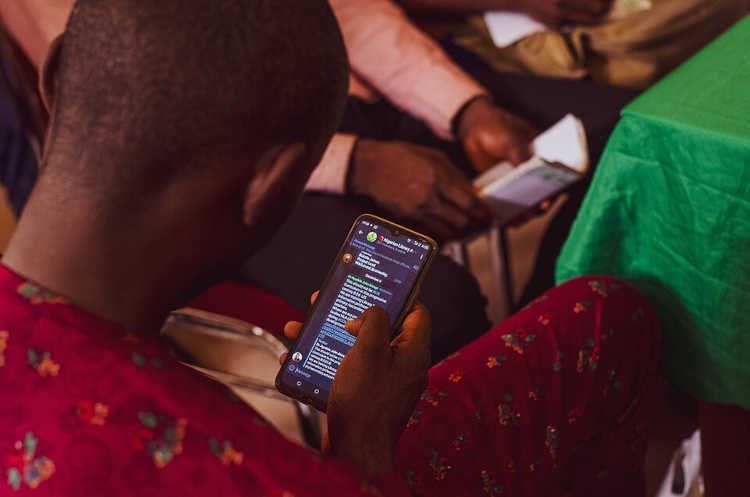
One year after the Nigerian Communications Commission (NCC) approved a 50 percent increase in telecom tariffs, the reality facing millions of Nigerians is that they are paying more but getting little or no improvement in service.
Development Diaries reports that when the NCC implemented the current price structure in January 2025, it was framed as a ‘sustainability intervention’.
In return for the tariff relief, the NCC and major mobile network operators promised Nigerians a clear improvement in service quality. One year on, that promise feels largely unfulfilled, as many subscribers say their experience has worsened rather than improved.
The 50 percent increase raised the minimum cost of voice calls from N6.40 to N9.60 per minute, while the maximum allowed price climbed to N50 per minute. SMS charges went up from N4 to N6, and the price of 1GB of data increased from N287.50 to N431.25.
While telecom operators are reporting stronger earnings, subscribers are still battling dropped calls, poor internet quality, and confusing billing.
This gap points to a deeper problem beyond network performance. It shows a failure in regulation and consumer protection.
Telecommunications in Nigeria support education, banking, healthcare, businesses, and everyday communication. They are a public utility meant to serve the public interest.
When consumers are asked to pay significantly more for services that remain unreliable, the issue becomes a breakdown in regulatory responsibility. The system that failed is the one meant to balance business survival with consumer rights.
The tariff increase approved in January 2025 was presented as a necessary move to help operators survive rising costs caused by inflation, a weak naira, and high diesel prices. However, the approval was not clearly tied to firm service delivery conditions.
There were no binding quality targets that operators had to meet, no clear penalties for failure, and no compensation framework for subscribers affected by poor service.
There was also no simple and transparent way for the public to track whether operators were actually improving their networks, an example of a failure to enforce accountability.
Industry players often point to serious challenges such as fibre cuts, equipment theft, access restrictions, and heavy dependence on diesel due to unstable electricity.
These problems are real, but they are not new. Over 19,000 fibre cuts in one year alone show long-standing weaknesses in infrastructure protection and coordination across government levels.
Approving higher tariffs without fixing these structural problems simply shifts the burden of failure to consumers, who now pay more for the same unreliable experience.
Responsibility for this situation is shared, with the NCC approving higher tariffs without putting strong, enforceable service conditions in place from the beginning.
For their part, telecom operators focused on recovering revenue and strengthening their finances, but did not sufficiently improve last-mile service or billing transparency.
As for the federal government, it failed to fully protect telecom infrastructure as critical national assets and did not address power sector instability or multiple taxation issues. State and local governments also played a role by allowing vandalism, denying access to sites, and imposing excessive charges.
This issue is also about rights. Nigerians have a right to clear and honest billing information, a right to digital access for work and income, a right to connectivity for learning, and a right to fair access regardless of location or income level.
National policies already recognise broadband access as essential for development. When people pay more and still struggle to stay connected, that commitment is weakened.
The impact of the tariff hike shows that low-income users now spend a larger share of their income on data, with students, who depend on mobile internet for education, facing unstable connections.
Small business owners, especially women running online businesses, struggle with rising costs and unreliable service. Rural and peri-urban communities remain stuck on congested networks, while advanced services like 5G are limited to wealthier urban areas. In effect, many Nigerians are funding improvements they may never benefit from.
As citizens, we have a role to play. We should demand clear, public performance reports for each telecom operator, document service failures and use NCC consumer portals, social media tagging, and civil society platforms to log dropped calls, data depletion and prolonged outages.
We should also push lawmakers to conduct oversight hearings on how the tariff hike was approved and why enforcement has been weak. Collective action from subscriber groups, students, and business associations can be more effective than isolated complaints.
Institutions also need to act. Higher tariffs should be clearly tied to measurable service improvements, with penalties and compensation where standards are not met.
Claims of infrastructure investment should be independently checked and linked to actual user experience. Telecom infrastructure must be protected as critical national assets, and billing systems must be made simpler and more transparent so consumers understand what they are paying for.
The key concern today is whether regulators exist to protect citizens or only to keep companies profitable. And when Nigerians pay more but still step outside or climb balconies to get a signal, the problem is accountability.
Photo source: Timmylegend