

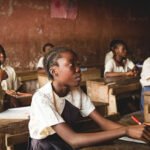




The UN and international NGOs, including World Vision, say one in six children are not enrolled in school, a phenomenon exacerbated by the Covid-19 pandemic.
Since the outbreak of the pandemic, education of both children and adults has been greatly affected.
Researchers have said that the contagion is likely to have a far-reaching impact on the future of millions of young people around the world.
One in three school children across the world have been unable to access remote learning during Covid-19 school closures, the United Nations Children’s Fund (UNICEF) said in a report.
It noted that children in Africa have been most adversely impacted, with 49 percent of them in East and Southern Africa unable to access remote education compared to 38 percent in South Asia and 34 percent in East Europe and Central Asia.
The report, Covid-19: Are Children Able to Continue Learning During School Closures?, examined 100 countries, looking at children’s ability to access remote learning through television and radio broadcasts or online classes and the availability of the correct educational materials on these platforms.
On the occasion of International Literacy Day, the French branch of World Vision noted that on top of the 258 million children worldwide not in school, the pandemic alone may push a further 9.7 children to drop out in the coming months due to conditions of extreme poverty.
To solve the educational problem, the NGO says it has established a programme known as ‘Unlock Literacy’.
‘Unlock Literacy’, according to the NgO, is designed to improve reading skills from a young age, at school, home, or in community.
Source: RFI
Photo source: FAWE