





The report from Benue State reveals a troubling disconnect between government announcements and the lived realities of communities.
Development Diaries reports that despite allocating N82.5 billion (15 percent of the 2025 budget) to education and recruiting over 9,000 teachers, many rural schools in the state remain without classrooms, roofs, desks, or even active teaching staff.
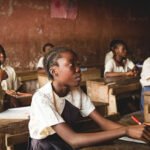
A recent report by Premium Times shows that basic education in Benue State is facing an alarming crisis, with thousands of children denied access to classrooms, teachers, and learning facilities despite government claims of progress.
The report has revealed that although the state has allocated more funds and claimed to recruit additional teachers, many communities are still left without teachers and the basic infrastructure needed for learning.
The promise of a brighter future through increased budget allocations and teacher recruitment remains unfulfilled for children in places like Logo, Ukum, and Ogbadibo local government areas.
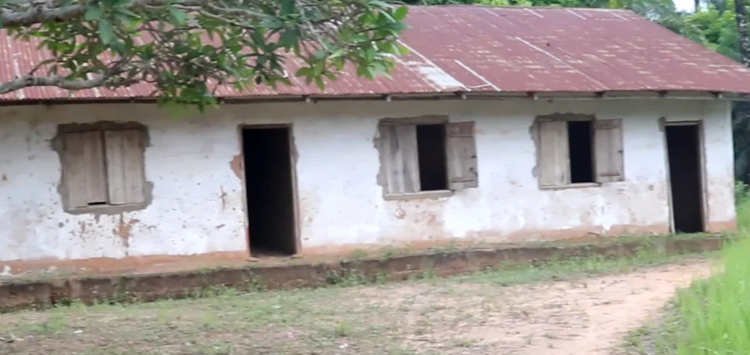
According to the report, in Logo LGA, pupils of NKST Primary School, Pagher, have been sent home because their only makeshift structure collapsed, while in Ukum LGA, children learn under grass huts exposed to the elements.
Such conditions show that increased budgetary allocation alone does not guarantee improved access to quality education if implementation is weak and infrastructure is ignored.
According to the United Nations Educational, Scientific and Cultural Organisation (UNESCO), governments are encouraged to dedicate at least 20 percent of their annual budgets to education to meet universal access targets.
While Benue has raised its allocation from N33.8 billion in 2024 to N82.5 billion in 2025, the real challenge lies in bridging the gap between policy announcements and on-the-ground delivery.
Communities across Ogbadibo, Logo, and Ukum LGAs are still faced with collapsed structures, deserted classrooms, and absent teachers.
Without classrooms or functional facilities, the government’s recruitment of thousands of teachers becomes largely symbolic, because teachers cannot teach where schools do not exist.
Parents interviewed admitted that they had withdrawn their children from school because of lack of infrastructure or inability to pay private school fees.
Some children, left idle, risk being lured into crime and armed groups, worsening insecurity in already fragile communities.
A community member rightly noted that ‘when children are left without classrooms and teachers, they turn to the streets’.
If Benue continues to neglect basic education infrastructure, it could trap many communities in poverty, insecurity, and illiteracy, holding back the state’s future growth.
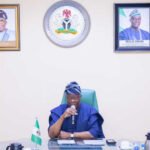
While Governor Hyacinth Alia has made commitments to prioritise education, there is no evidence of effective monitoring, needs assessment, or community engagement in deploying the newly recruited teachers.
Communities like Ikpochi and Ugbugbu in Ogbadibo remain without any teaching staff, despite the recruitment exercise.
It is deeply concerning that government can celebrate increased funding and teacher recruitment, yet fail to ensure that schools with no roofs, desks, or pupils are even functional.
This gap reflects poor governance, weak accountability, and disregard for the plight of rural children who depend solely on public schools.
Development Diaries therefore calls on Governor Hyacinth Alia and Commissioner of Education, Fredrick Kyaan to move beyond figures and paper commitments.
They must conduct a transparent audit of schools and infrastructure across Benue State, ensure that newly recruited teachers are deployed to communities where they are most needed, and rebuild collapsed classrooms to make learning possible.
To safeguard the future of Benue, the governor and commissioner must treat the state of basic education as an emergency and deliver tangible results to the children whose futures hang in the balance.
Photo source: Daily Post