



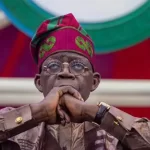



Vice President Kashim Shettima’s recent remarks about how former Attorney General of the Federation (AGF) Mohammed Adoke prevented former President Goodluck Jonathan from removing him as Borno State governor starkly expose the moral inconsistency in his leadership, especially given his silence over President Bola Tinubu’s unconstitutional removal of a sitting governor.
Development Diaries reports that Shettima spoke on Thursday in Abuja at the public presentation of Adoke’s memoir.
He told it like a near-martyrdom story of how he was the ‘most demonised’ man in Nigeria, and how Adoke bravely told Jonathan: ‘You can’t remove an elected governor’.
That is very inspiring.
However, there is a tiny problem, as Shettima now serves as vice president under President Tinubu, the same man who, barely three months ago, declared a state of emergency in Rivers State and did exactly what Jonathan only ‘mooted’ by removing a sitting governor, his deputy, and an entire elected legislature.
No moral gymnastics can erase that. And this is the kind of contradiction that makes the average Nigerian scream, ‘Na wa o, these people no dey even pretend again’!
So what Jonathan considered but did not do, Tinubu did, and Shettima is now standing in that government, clapping, smiling, and launching books.
In Borno back in 2013, Shettima stood firm in office while Boko Haram ravaged his state. Jonathan declared a state of emergency but did not touch the office of the governor.
Democracy, at least on paper, survived.
Now fast-forward to Rivers State in 2025, and what do we see? A president appointing an administrator over an elected governor and legislature.
Not because of an earthquake. Not because aliens landed in Port Harcourt. But because of a political tussle.
Where is principle? Is it on sick leave?
Let’s break this down for the everyday Nigerian. Imagine that in your town, you and your neighbours vote for a town council. Months later, the president wakes up, declares there is ‘confusion’, sacks all your elected leaders, and sends in a retired admiral to ‘manage things.
Your vote is rendered useless. Your mandate is hijacked. And your voice is relegated to background noise while Abuja makes all the decisions.
Now imagine Vice President Shettima telling you with a straight face how unfair it would have been if Jonathan had done that to him.
Is this not what we call ‘double standards on steroids’?
Of course, some legal acrobatics have been performed to justify the Rivers State fiasco. The current AGF, Lateef Fagbemi, has gone to great lengths to explain why Tinubu’s move is legal.
But one has to ask: would Fagbemi’s argument stand if roles were reversed? Would Shettima applaud this same legal logic if he were the governor being replaced by federal fiat? Would he still launch a memoir in honour of an AGF who let it happen?
Citizens are watching, and what they see is frightening. They see that what’s wrong depends on who is in power. That today’s victim can become tomorrow’s villain. That the rule of law in Nigeria is more of a rule of convenience. And that no matter how loud you scream ‘democracy’!, a powerful man in Abuja can simply switch off your government like NEPA.
This is why trust in governance continues to nosedive in Nigeria. Because leaders talk one thing and walk in the opposite direction. When citizens see politicians flip principles faster than suya on a hot grill, they begin to lose faith, not just in leaders but in the system itself.
If Shettima felt so strongly about the sanctity of elected office, why didn’t he speak out, or better still, resign when his principal pulled a political coup in Rivers State?
If he could remember so vividly how unfair it would have been to be removed as governor, shouldn’t he, at the very least, express discomfort now that the tables have turned?
But silence, as usual, is the preferred national anthem in high places. Our leaders have mastered the art of selective outrage: loud when it suits them, mute when it implicates them.
So, what’s the way forward?
Citizens must stop treating political hypocrisy as entertainment, as it is dangerous when a vice president celebrates the rule of law in the morning and defends its erosion in the evening.
We must remind our leaders that principles are not agbadas to be worn on certain occasions and discarded when uncomfortable. They are meant to be lived, even when they are inconvenient.