


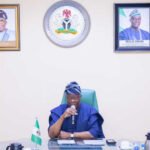




The World Bank’s report is another reminder that Nigeria’s social safety-net programmes are failing to protect those who need them most.
Development Diaries reports that the World Bank’s new report titled ‘The State of Social Safety Nets in Nigeria’ revealed that only 44 percent of total benefits from government-funded safety-net schemes actually reach poor Nigerians.
The report reviews Nigeria’s spending on social safety nets, evaluating how well they cover and support citizens.
It found that poor targeting, inadequate funding, and disjointed implementation have left millions of vulnerable Nigerians without real relief, despite the government’s many promises to reduce poverty.
Despite billions spent and endless promises of relief, only 44 percent of benefits actually reach poor Nigerians. This means that more than half of the country’s most vulnerable people are still left out of government support systems.
It also shows that poor targeting and unequal distribution continue to make poverty reduction efforts look good on paper but weak in real life.
This development is worrying because it confirms what many Nigerians already know, that poverty interventions are not designed to match the realities of those at the bottom.
With the poorest families usually larger in size, the decision to pay a flat rate per household rather than per person only deepens inequality.
Families of eight in remote villages receive the same amount as smaller households in cities, forcing them to share meagre sums that barely cover food for a few days.
When social programmes miss the poor, poverty becomes a cycle that government policies claim to fight but quietly sustain.
This also raises questions about government priorities and transparency. According to the bank, Nigeria spends barely 0.14 percent of its gross domestic product on social protection, far below the global average of 1.5 percent and the Sub-Saharan African average of 1.1 percent.
How can a country with 133 million people living in poverty spend just 0.14 percent of its GDP on social protection, one of the lowest in Africa, and expect real impact?
It is even more troubling that over 60 percent of the funding for these programmes comes from donors like the World Bank.
Depending on external help to feed citizens is neither sustainable nor responsible.
The Minister of Finance, Wale Edun, and the National Coordinator of the National Social Safety Nets Programme must fix the weak systems that make the poor invisible in government databases.
The Federal Ministry of Humanitarian Affairs and Poverty Alleviation, the National Social Safety Nets Programme (NASSP), Conditional Cash Transfer (CCT), Government Enterprise and Empowerment Programme (GEEP), National Home-Grown School Feeding Programme (NHGSFP) and the Federal Ministry of Finance and Coordinating Ministry of the Economy must urgently reform its social protection policies.
Individuals instead of households should be targeted, ensuring that funds reach the real poor, not the well-connected.
The National Assembly should also strengthen oversight to stop leakages and demand full accountability for every naira meant for social welfare.
If the government can build roads and airports, it can also build systems that feed its people, because if only 44 percent of the poor get help, then what we have is not a safety net, it is a sieve.
Photo source: Fed Min of Humanitarian Affairs