






The African Development Bank’s (AfDB) approval of a $1.78 billion Country Strategy Paper (CSP) for Namibia offers the country an opportunity to drive inclusive economic growth.
Development Diaries reports that the 2025-2030 strategy is expected to pave the way for job creation and economic diversification.
According to the bank, it is also meant to address key challenges facing one of the world’s most unequal countries, where youth unemployment exceeds 40 percent, and per capita income has fallen from $5,942 in 2012 to $4,240 in 2024.
With these statistics, the urgency for structural reforms cannot be overstated.
The CSP, which runs from 2025 to 2030, represents a call for Namibia to confront longstanding development gaps that have kept millions on the margins of progress.
This emphasis acknowledges that without reliable roads, power, and water, no amount of ambition can translate into sustained economic expansion.
In a country looking to position itself as a regional logistics hub, these investments could shift the narrative from dependency to regional relevance.
The second pillar, human capital development, is equally urgent, as Namibia’s education-to-employment pipeline is broken for too many young people, and the CSP directly targets this gap through market-relevant technical and vocational training, MSME support, and programmes that strengthen women’s economic participation.
These interventions matter because infrastructure alone cannot deliver inclusive growth; citizens must have the skills, tools, and opportunities to take advantage of emerging sectors.
A strategy that strengthens both the physical and human foundations of development stands a better chance of breaking the cycle of inequality.
The CSP also positions Namibia to diversify beyond its traditional reliance on mining and agriculture by expanding manufacturing capacity, integrating MSMEs into regional value chains, and strengthening trade links with Angola and Zambia.
With planned improvements expected to raise electricity access from 59.5 percent toward universal coverage, the strategy could open the door for green industries, including Namibia’s growing ambition to lead in green hydrogen production.
But to turn this new strategy into tangible progress, Namibia must strengthen accountability, ensure community participation, and safeguard equitable access to the opportunities created.
The CSP lays the groundwork; the true test will be whether Namibia uses this moment to build a future where growth is broad-based and every citizen, especially the young, has a fair chance to thrive.
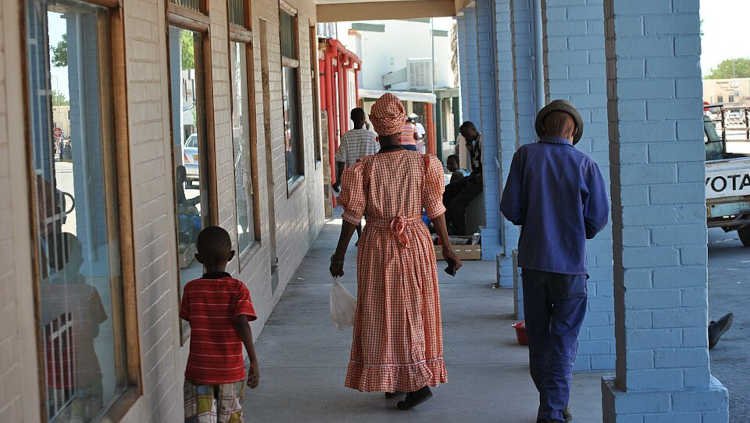
Photo source: Auiuitrev