



The latest news about allegedly missing oil money serves as a warning about how public funds quietly slip away while citizens bear the consequences.
Development Diaries reports that, according to audit findings cited by Socio-Economic Rights and Accountability Project (SERAP), the Nigerian National Petroleum Company (NNPC) Limited has questions to answer over N22.3 billion, $49.7 million, £14.3 million and €5.2 million flagged in the 2022 report of the Auditor-General of the Federation.
SERAP’s decision to head to court has pushed the issue into the open, but the deeper problem is a system that treats Nigerians as spectators to money that belongs to them.
The issue of focus is that there is a breakdown in public finance governance in the oil sector.
In a functioning system, oil revenue is earned, spent with clear authorisation, independently audited, and followed by swift recovery or sanctions when red flags appear.
In Nigeria, audit queries are often reduced to annual rituals, reports are published, outrage flares briefly, and then silence follows. When audit alarms do not lead to enforcement, the system stops being weak and becomes broken.
The allegations matter because oil revenue is the backbone of Nigeria’s public finances and when large sums are unaccounted for, citizens pay twice.
First, through the absence of basic services such as well-equipped hospitals, functional schools, and secure infrastructure, second, through inflation, higher borrowing, and austerity, as government insists there is ‘no money’ to meet public needs.
What looks like an accounting dispute quickly becomes a lived crisis for households already under pressure.
One of the failures that feed this pattern is that audit findings are rarely treated as triggers for consequences, making non-compliance low risk.
Another failure is that procurement and contract management remain fertile ground for abuse, where payments can be made without delivery and documentation can go missing without penalty.
Despite laws like the Freedom of Information Act and reporting obligations under the Petroleum Industry Act, transparency remains reactive, offered only under pressure rather than as standard practice.
Who then should be held responsible?
NNPCL’s board and management are primarily responsible for maintaining traceable spending and responding fully to audit queries.
Federal oversight bodies such as the Office of the Auditor-General of the Federation, the Federal Ministry of Finance, and the Budget Office of the Federation, alongside the National Assembly’s Public Accounts Committees, are expected to convert audit reports into formal hearings, clear recovery timelines, and enforceable sanctions.
Additionally, the Economic and Financial Crimes Commission (EFCC) and the Independent Corrupt Practices and Other Related Offences Commission (ICPC) have a duty to investigate and recover funds where diversion is suspected, while contractors and consultants named in queried transactions remain part of the accountability chain and should be held equally responsible.
Beyond institutions, this is a citizens’ issue rooted in rights and equity. When oil money goes missing, the impact shows up in overcrowded hospitals, underfunded schools, rising insecurity, and deepening inequality.
Women often shoulder unpaid care when services fail, children lose learning opportunities, persons with disabilities face compounded barriers, and rural communities suffer most due to limited alternatives.
The outcome of this case will signal whether audit reports in Nigeria are warnings that lead to action, or noise the system has learned to ignore.
Nigerians should move beyond explanations and demand documents. This means filing Freedom of Information requests to NNPCL and oversight bodies for transaction records, contract awards, proof of delivery, and the responses submitted to the Auditor-General.
Citizens should also pressure their senators and representatives to confirm whether public accounts hearings have been scheduled, what recovery plans exist, and which contractors have been summoned.
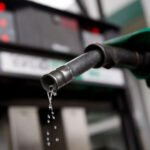
Photo source: NNPC