





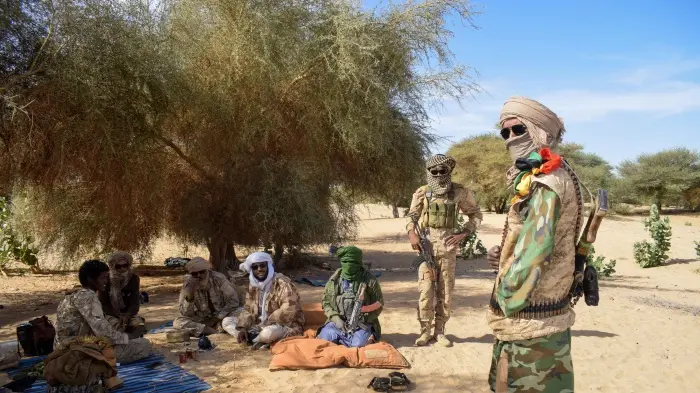
The attacks in Kamona and Balle show a disturbing repeat of violence against civilians by Mali’s military and the militias working with them.
Development Diaries reports that Mali’s military and allied militias killed at least 31 civilians and burnt homes in two villages in October in the country’s embattled Segou region, according to a report by Human Rights Watch (HRW).
Both villages sit in a part of central Mali under the influence of the Al-Qaeda-linked JNIM. According to witnesses, soldiers and Dozo fighters killed the villagers on the spot after accusing them of working with the group.
Testimonies show that people were executed without any form of trial, their homes burned, and their bodies left in mass graves.
These acts raise clear human rights concerns, especially as the victims were unarmed villagers who were accused, without evidence, of supporting armed groups.
Executions, destruction of civilian property, and attacks on people who pose no threat all point to serious violations of international humanitarian law.
Mali’s authorities also have legal obligations under the Geneva Conventions and the Rome Statute, which the country remains bound to until 2026 despite withdrawing from the International Criminal Court (ICC).
These obligations forbid targeting civilians, carrying out extrajudicial killings, and engaging in cruel or degrading treatment.
The reports from HRW indicate that soldiers and allied militias failed to distinguish between civilians and armed fighters, a core requirement of the laws of war.
If confirmed, these killings may amount to war crimes, especially as witnesses say the army acted with intent and coordination.
Now, the lack of response from Mali’s justice and defence ministries further deepens concern.
When authorities fail to investigate or acknowledge such abuses, it fuels impunity and sends a dangerous message that security forces can act without consequences.
Meanwhile, the African Union’s (AU) slow response to the growing crisis shows a regional leadership gap. The AU Peace and Security Council has the power to push for accountability, coordinate diplomacy, and support efforts to protect civilians, yet its interventions have been limited to mere expressions of worry.
Mali is in a fragile moment, and ignoring these killings only increases the risk of further violence.
The Malian government must immediately launch credible investigations, hold anyone involved accountable, and ensure protection for civilians caught between armed groups and state forces.
Also, the African Union should step up and treat the crisis with the seriousness it deserves. Civilians cannot continue to pay the price. Strong, coordinated action is needed now.
Photo source: Reuters/Abdolah Ag Mohamed