


The political crisis in Rivers State may no longer shock anyone, but its consequences are deeply troubling, as once again, ordinary people in the oil-rich state are paying the price for elite power struggles.
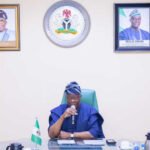
Development Diaries reports that just when we thought the political tension between Governor Siminalayi Fubara and members of the state’s House of Assembly was over, another move to impeach the governor and his deputy is in the news.
For many people of Rivers, this feels like a replay of the same drama that has dragged on for years. Peace agreements are announced, hands are shaken, and then everything collapses again.
To the everyday person on the streets, it looks like those in power are more interested in fighting themselves than governing the state.
While leaders are busy pulling strings and proving who is stronger, the people are left watching, confused and tired, as their lives remain unchanged or even get harder.
The cost of this endless political fight is high in Rivers State, as nothing works as it should, with public offices slowing down, decisions being delayed, and development taking a back seat. Typically, investors do not like uncertainty, so they either stay away or quietly move their money elsewhere.
States across Nigeria are in quiet competition, whether they admit it or not. And those making progress, such as Lagos, Akwa Ibom, Anambra, Jigawa and Niger, have found ways to manage internal disagreements without allowing them to cripple governance or frighten investors.
On the contrary, Rivers State seems to thrive on escalation. Crisis is taken to dangerous heights, repeatedly and publicly, with little regard for cost. And those costs are mounting.
A 2025 BusinessDay analysis on the economic impact of the political crisis in the state revealed that investors were adopting a ‘wait-and-see’ stance or quietly exiting the state.
Also, economists estimated in 2025 that Rivers State had lost over two trillion naira in public sector investments due to prolonged political instability.
With an estimated GDP of about N28 trillion, losing roughly 30 percent annually translates to N5.2 trillion wiped off the economy each year if the crisis continues.
Jobs that could have been created never come, projects that could improve lives are put on hold, and the state’s economy continues to suffer.
Rivers State is rich and full of potential, yet it keeps losing opportunities because politics is allowed to burn everything in its path.
This situation affects the people of the state directly, even if it does not always feel obvious; because when investors leave, jobs disappear, and when the government is distracted, hospitals lack attention, schools are neglected, and roads remain bad.
When public money is tied up in political battles, the people pay through higher hardship and fewer services. Yet many citizens are only watching from the sidelines, as if this fight has nothing to do with them.
This is where the real danger lies. Rivers people must begin to ask direct questions of those in power. How is the ongoing face-off between Governor Fubara and the leadership of the Rivers State House of Assembly helping families put food on the table?
How does it improve security in our communities or create jobs for young people? Why are lawmakers prioritising impeachment threats and political loyalty battles instead of passing laws that directly improve the livelihoods of the people? And why are the Rivers people not demanding clear answers from the governor, the speaker, and their constituency representatives?
Rivers people, you must remember that democracy does not end on election day. Silence after elections gives elected officials the space to govern without accountability. When you do not question budgets, challenge priorities, or demand transparency, political leaders are free to turn governance into a personal power contest, and that is what is playing out in the state.
Rivers people need to become more active participants in governance. This means calling on your members of the House of Assembly to explain how they are representing your constituencies, demanding public briefings from the governor on how the crisis affects service delivery, and insisting that local government chairmen speak openly about how instability is affecting communities.
You can use townhalls, radio shows, civil society platforms, and social media to ask questions and keep pressure on those in office.
If you do not raise your voices now and insist on accountable leadership, this cycle will repeat itself, and the state will continue to pay the price.
Photo source: Sim Fubara