


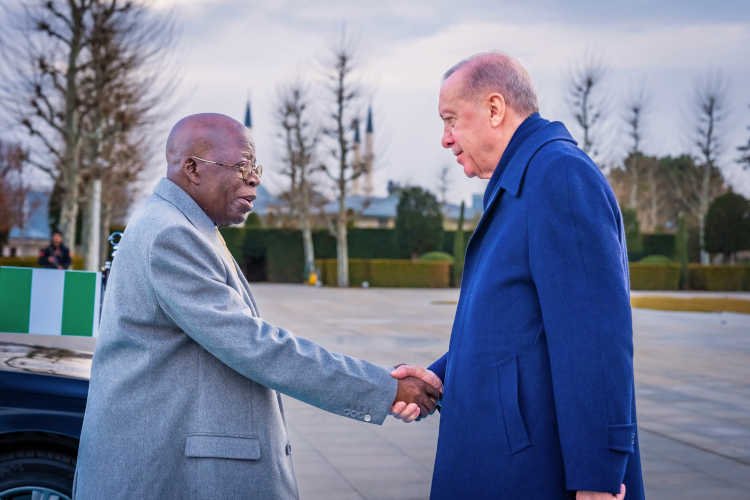
President Bola Tinubu’s visit to Turkey has been framed as strategic, especially on defence and economic cooperation, but the real issue is not the stumble or health rumours but how Nigeria’s defence and economic governance system keeps failing citizens.
Development Diaries reports that the Nigerian leader is in Turkey as part of Nigeria’s ongoing diplomatic engagements aimed at strengthening bilateral relations, particularly in trade, investment, defence cooperation and infrastructure development.
The key question to be asked is, what system is at stake, and how is it failing?
A summary of Nigeria’s defence and security budgets from 2022 to 2025 shows allocations rising from nearly N2.98 trillion in 2022 to a proposed N4.91 trillion in 2025, yet killings, kidnappings, and displacement continue.
This shows a system where defence procurement happens, but security outcomes do not improve.
On defence and security, the failure pattern is that arms and security agreements are opaque, with little public or legislative oversight.
Nigerians are told partnerships are ‘strategic’, but they are not told what equipment is bought, what gaps are filled, or what results to expect.
There are no clear benchmarks for reduced attacks or faster response times. This failure rests with the Ministry of Defence, the National Security Advisor, the National Assembly defence committees, and the presidency, which keeps defence deals secret.
Section 14(2)(b) of the 1999 constitution states that the security of citizens is the primary duty of government. But when insecurity persists despite massive spending, that duty is not being met.
The same problem shows up in economic diplomacy, with Nigeria signing memoranda of understanding (MOUs) and going on high-level visits, but jobs do not follow.
There is no public framework linking foreign partnerships with factories, local suppliers, or youth employment. Deals often lack enforceable local content or skills transfer clauses.
As a result, youth unemployment stays high, and small businesses are left out. This points to weak coordination between diplomacy and industrial policy, and failures by the Ministry of Trade, the NIPC, and the presidency’s economic coordination role.
Transparency and accountability are also failing, as public communication focuses on dismissing rumours instead of releasing policy details.
Nigerians are not told the value of defence or investment deals, their timelines, or who is responsible if they fail. This weakens the right to information and democratic oversight.
The silence also hides who is most affected, as women and girls suffer first from insecurity through displacement and violence. Youth are also excluded when jobs and training are not built into deals.
Rural and conflict-affected communities pay the price without any voice, and for persons with disabilities, conflict increases disability prevalence, yet defence planning rarely includes rehabilitation or inclusion considerations.
When defence and economic diplomacy do not reduce these harms, they become rights failures.
In light of all these, here are questions we should be asking as citizens: What specific defence equipment or capability gaps is Turkey filling?
How much will these defence engagements cost Nigerian taxpayers? What measurable security outcomes are expected within six, 12, or 24 months? What local jobs, factories, or skills transfer are guaranteed under economic cooperation?
Which agencies will be audited if these outcomes fail?
Nigerians must demand disclosure and file Freedom of Information (FOI) requests to the Ministries of Defence and Trade on the nature, cost, and outcomes of Turkey agreements.
The National Assembly must hold public hearings and commit to audits within 12 months. The presidency must publish a Defence Outcomes Brief with clear security targets, and the Ministry of Trade must tie cooperation to job and SME targets.
Until foreign trips lead to safer communities, decent jobs, and transparent spending, they remain elite performances, not public value, and Development Diaries exists to insist on that connection.
Photo source: President Bola Tinubu/X