






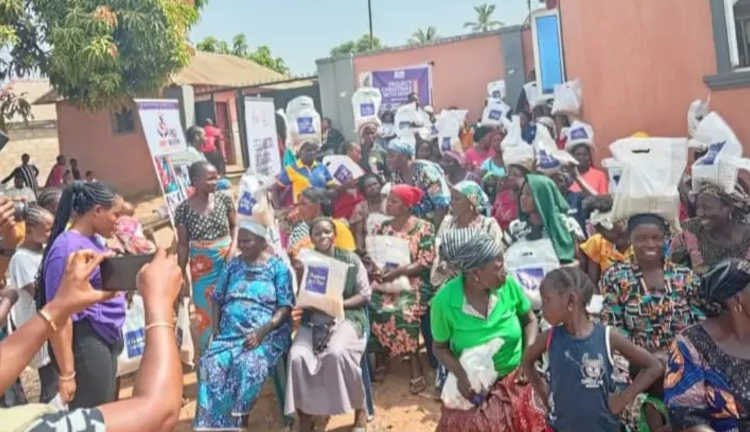
As many Nigerian families struggled to put food on the table this Christmas, Hope Risers Global Foundation (HRGF)stepped in, reaching hundreds of vulnerable households nationwide through its Christmas With Hope project.
Development Diaries reports that according to statistics from the National Bureau of Statistics (NBS), over 133 million Nigerians are classified as multidimensionally poor, while food inflation has pushed basic nutrition beyond the reach of many households.
The initiative, themed ‘Lighting Up Lives: A Christmas of Hope and Unity’, was implemented in partnership with organisations including Enitan Growth Hub, Tech Herfrica, Ivyline Care Foundation, Abila Foundation, Pregnancy Care Support, and several others nationwide.
The project was designed as a food drive to support widows, persons living with disabilities, internally displaced persons, and families in extreme poverty, while contributing to Sustainable Development Goal two on Zero Hunger.
At the flagship outreach at the Internally Displaced Persons (IDP) Camp in Durumi, Abuja, the Founder of HRGF, Angonimi David-Imeh, said the intervention went beyond emergency relief, noting that the foundation is laying the groundwork for a long-term, home-grown agricultural sustainability project across the 36 states and the Federal Capital Territory.
She explained that HRGF and its partners relied on grassroots networks to deliver food and essential aid to those most in need, stressing that the programme restored dignity and hope to families whose incomes had dropped to near zero.
Beneficiaries included widows struggling to sustain households, persons living with disabilities, chronically ill individuals, and displaced families.
Highlighting the project’s reach, David-Imeh said 500 households were supported in each of Enugu and Kebbi states, while collaborations with local NGOs, including Orchard Hub Foundation in Enugu, helped expand coverage and improve efficiency.
In Ekiti State, she disclosed that part of the outreach funds was used to pay medical bills for a child living with sickle cell disease, enabling the child to secure a one-year health insurance cover, while in Osun State, immediate support was provided to a family living in extreme deprivation.
David-Imeh called on government institutions, development partners, and the private sector to scale up investments in food security and social protection, warning that short-term charity cannot replace sustained policy action.
‘What this project shows is that organised compassion can save lives, but Nigeria must address hunger and vulnerability as a national development priority’, she said.
Source: NAN
Photo source: NAN