






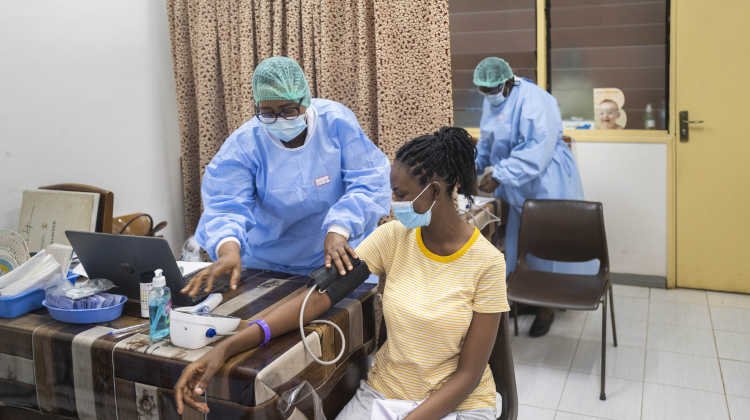
The looming nationwide strike by Nigerian nurses, coming on the heels of an ongoing strike by doctors at Lagos State University Teaching Hospital (LASUTH), highlights why Nigeria needs to fix its healthcare workforce crisis.
Development Diaries reports that healthcare services across Nigeria might be disrupted on Wednesday as nurses under the umbrella of the National Association of Nigeria Nurses and Midwives, Federal Health Institutions Sector (NANNM-FHI), are set to embark on a seven-day nationwide warning strike.
According to media reports, the strike will affect 74 federal hospitals, other state hospitals and primary healthcare centres.
It is understood that the industrial action is in protest over issues including poor remuneration, staff shortages, unpaid allowances, and unsafe working conditions.
The union had, on 14 July, 2025, issued a 15-day ultimatum to the federal government, demanding immediate intervention to prevent a total healthcare shutdown.
This is happening as services have already been disrupted in LASUTH due to salary-related grievances because doctors began strike over unresolved salary deductions and welfare issues.
The planned seven-day warning strike by NANNM-FHI threatens to paralyse operations in 74 federal hospitals, as well as state and primary healthcare centres across the country.
These coordinated actions are as a result of long-standing issues of poor remuneration, unsafe working conditions, understaffing, and government neglect, challenges that continue to push healthcare professionals to the brink.
The grievances raised by nurses are alarming and deserve immediate attention.
Despite their crucial role in healthcare delivery, nurses are reportedly receiving only 6.8 percent as shift allowance instead of the 30 percent mandated by a 2009 circular, barely more than security personnel with far less demanding roles.
Additionally, their uniform allowance remains a meagre N20,000 per year, unchanged for over two decades, despite the need for regular replacement due to hygiene requirements.
Nurses also decry the absence of a dedicated Department of Nursing within the Federal Ministry of Health and the failure to implement an approved scheme of service since 2016. These concerns highlight systemic neglect and undervaluing of a profession that forms the backbone of the healthcare system.
The challenges faced by nurses expose the bigger issues in Nigeria’s healthcare sector.
According to the World Health Organisation (WHO), Nigeria has a doctor-to-patient ratio of 1:4,000 and a nurse-to-patient ratio of 1:1,200, which is well below the recommended standards of 1:600 and 1:400 respectively.
Although the country reportedly produces over 10,000 nurses annually, many remain underemployed or forced to migrate abroad in search of better pay and conditions.
This situation of high unemployment amid massive workforce shortages shows policy failure in workforce planning and budgetary prioritisation.
Development Diaries calls on the Federal Ministry of Health, the Budget Office, and the National Assembly Committees on Health to act with urgency.
These institutions must immediately engage the nurses’ union and the Medical Guild in good-faith negotiations to avert a complete breakdown of services. A comprehensive audit of workforce welfare policies and salary structures should be initiated.
Healthcare is a fundamental human right, and the government’s continued inaction in the face of repeated strikes endangers lives and also erodes public trust in institutions.
Photo source: United Nations

