

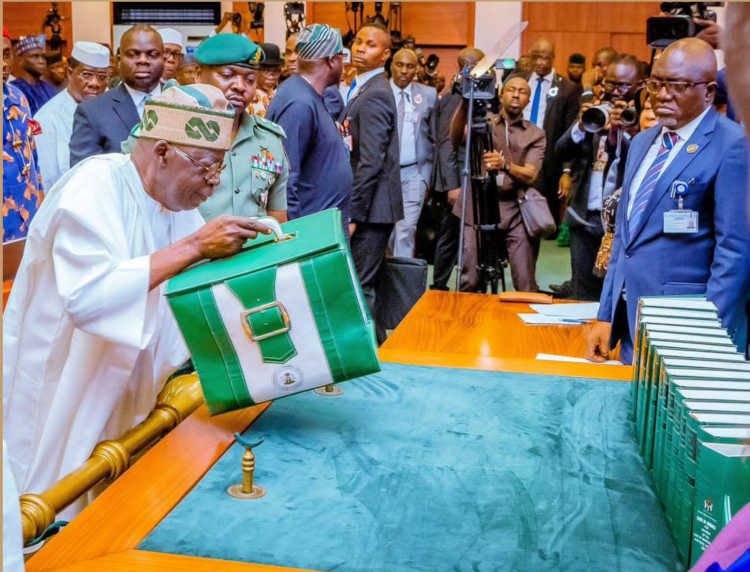
Nigeria’s 2026 budget is now caught in another cycle of delays, raising serious concerns about the country’s ability to plan, spend, and deliver public services effectively.
Development Diaries reports that, with barely six weeks to the new fiscal year, the Federal Executive Council (FEC) has yet to receive the draft budget, putting the entire process off track and repeating a pattern that has weakened Nigeria’s fiscal stability for years.
The Guardian reports that the delay may worsen because the Senate is requesting a comprehensive report on the utilisation of the 2024 budget, clear plans for the 2025 capital projects, and an updated Medium-Term Expenditure and Fiscal Strategy Paper (MTEF/FSP).
Under the Fiscal Responsibility Act, the MTEF/FSP should be submitted at least four months before a financial year begins, yet we are deep into the fourth quarter with no updated framework in sight.
This delay is unfolding at a time when economic indicators have shifted significantly.
Oil prices, pegged at $75 per barrel in the current plan, have struggled to exceed $70 for months, and there is still no evidence that Nigeria can meet its 2 million barrels per day production target anytime soon.
Without adjusting these assumptions, the 2026 budget risks being built on unrealistic projections, leading to revenue shortfalls and further cuts to essential services.
Meanwhile, the Senate, still waiting for full reports on the 2024 budget performance and other key documents, suggests a budgeting system that is struggling to meet even its basic transparency requirements.
Across ministries, departments and agencies (MDAs), the consequences of poor planning are already visible.
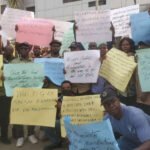
Many ministries report stalled programmes, two-year delays in human capital development activities, and unpaid contractors protesting at the National Assembly, symptoms of a system where appropriations do not match funding capacity.
The report by The Guardian also revealed that budget implementation reports, once published quarterly, have not been updated in nearly two years.
This pushes Nigeria even further away from the accountability standards expected under the Fiscal Responsibility Act.
To break this cycle, President Bola Tinubu, the Ministry of Budget and Economic Planning, and the National Assembly must immediately complete the MTEF review and fast-track the 2026 budget process.
Nigeria cannot keep running its economy on late budgets, weak revenue assumptions, and patchy reporting. A timely, transparent, and credible budgeting process is not a favour to citizens; it is the foundation of a functioning economy and stable public governance.