






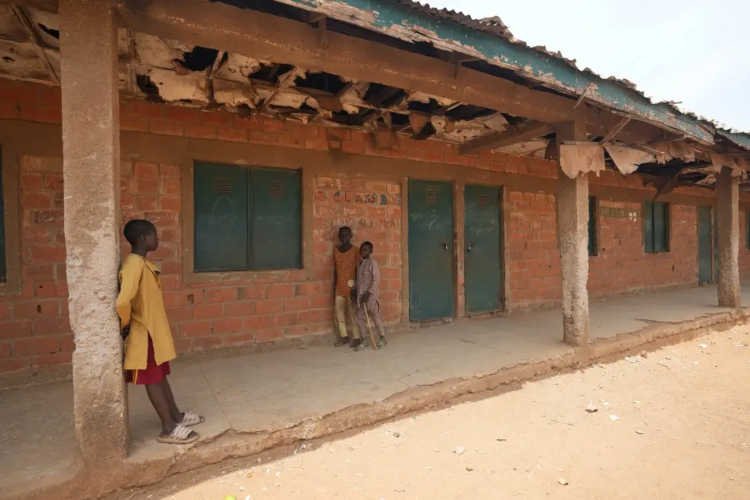
The continued failure of 30 states to operationalise the Safe Schools Initiative is deeply troubling, especially at a time when attacks on schools are rising again.
Development Diaries reports that following the Chibok abduction, the Safe Schools Initiative was launched in May 2014 with an initial $10 million investment and subsequently a multi-donor trust fund organised in collaboration with the United Nations to safeguard education against attacks.
Also, Nigeria has since adopted a National Policy on Safety, Security, and Violence-Free Schools in 2021, signed the Safe Schools Declaration in 2015, ratified it in 2019, and hosted the 4th Global SSD Conference in Abuja.
The initiative is supported by a N144.8 billion finance plan (2023–2026) that depends on donations from the federal government, states, and donors.
However, in light of recent school attacks, media reports indicate that only a small portion of the funds have been made available for implementation, and state co-funding is still uneven.
The recent attacks in Kebbi and Niger states show how costly this inaction has become. Barely days after the abduction of 24 schoolgirls in Kebbi, gunmen stormed St. Mary’s Catholic School in Niger State, seizing 303 students and 12 teachers in one of the worst mass kidnappings in years.
These incidents occurred despite earlier intelligence alerts and directives to shut down high-risk institutions.
Despite these alarming figures and a national financing plan of N144.8bn (2023–2026), several states have neither released their counterpart funds nor set up functional coordination centres, leaving millions of children exposed.
When schools can reopen despite known threats, and when designated monitoring centres remain empty shells without equipment, the message is clear: children are being left to fend for themselves in environments that should shield them.
This gap between national commitments and actual implementation undermines Nigeria’s public pledges under the Safe Schools Declaration and the 2021 National Policy on Safety, Security and Violence-Free Schools.
With 11,550 schools registered on the national monitoring platform but without the tools needed for surveillance, tracking, or emergency response, the country is running a fragile system that relies more on luck than on real protection.
Civil society, parents and student groups have repeatedly raised alarm about this gap, insisting that without proper structures, trained personnel and early-warning mechanisms, the cycle of attacks will continue.
This is the moment for decisive action. President Bola Tinubu, the Minister of Education, Tunji Alausa, the National Coordinator of Financing Safe Schools in Nigeria, Halima Iliya, the National Security Advisor, Nuhu Ribadu, and all state governors must move beyond speeches and take concrete steps to activate the Safe Schools framework nationwide.
Children cannot wait. Their right to learn in safety is non-negotiable, and every delay deepens the danger they face.
Photo source: Sunday Alamba/AP