

On a day the world was told to ‘stand with science’, many Nigerians were still standing in empty clinics, hoping medicine would show up.
Development Diaries reports that when the World Health Organisation (WHO) marked World Health Day 2026 with the theme ‘Together for Health, Stand with Science’, its Director-General, Tedros Adhanom Ghebreyesus, reminded everyone that science has saved billions of lives.
He mentioned vaccines, antibiotics, diagnostics, and all the things that make modern health care look like progress.
But when you look at what is happening in parts of Nasarawa State, north central Nigeria, you realise that for many citizens, science is still being kept at the gate.
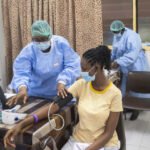
In Lafia, Akwanga, and Doma, government reports quietly documented what health care looks like on the ground., with patients travelling long distances only to arrive at primary health centres that have no drugs, limited personnel, and barely any funding.
In some cases, these centres have been reduced to what officials themselves described as ‘mere consulting points’, which, in everyday language, means you go there to be told you are sick and then advised to go somewhere else to actually get help, if you can afford it.
So while the world is talking about genomics and innovation, some Nigerians are still trying to find paracetamol.
The gap between these two realities is a funding decision. Nigeria’s 2026 health budget sits at about N2.48 trillion, which is roughly a small slice of total government spending.
The same global body calling for science recommends that countries commit about 15 percent of their budget to health. If Nigeria were to follow that advice, we would be looking at something closer to eight trillion naira.
What exists now is the reason a health centre cannot stock basic drugs, a nurse has to improvise, and a patient is told to try again somewhere else.
And when primary health care fails, everything else starts to wobble.
The National Primary Health Care Development Agency was designed to ensure that the first point of contact between citizens and the health system actually works.
This is where immunisations should happen, where pregnant women should receive care, childhood illnesses should be treated early, and chronic conditions should be managed before they become emergencies.
But when that front door leads nowhere, people are forced to flood secondary and tertiary hospitals with conditions that should never have escalated.
These hospitals, already stretched thin by workforce shortages and recurring industrial actions, become overcrowded. The same system then complains about pressure, as if it did not create the conditions for that pressure in the first place.
This is where days like World Health Day become more than hashtags and speeches, because on the same day global leaders were urging countries to stand with science, Nigeria’s own documentation was showing communities standing without it.
That contradiction is now on record, and it is no longer something that can be explained away with press statements or event photos.
This is the point where citizens have to stop treating broken health centres as normal and start asking the right questions. What is the state of the primary health centre in your community? Are there trained staff? Are there essential drugs? Where is the funding going?
Local governments, which are closest to these facilities, cannot continue to operate in silence while citizens carry the burden.
At the same time, institutions must move beyond existing on paper. The National Primary Health Care Development Agency should actively track what is happening in every local government area and make that information public, while the Federal Ministry of Health cannot treat documented failures as routine.
So when the world says ‘stand with science’, the real question for Nigeria is whether science will finally stand with its people.
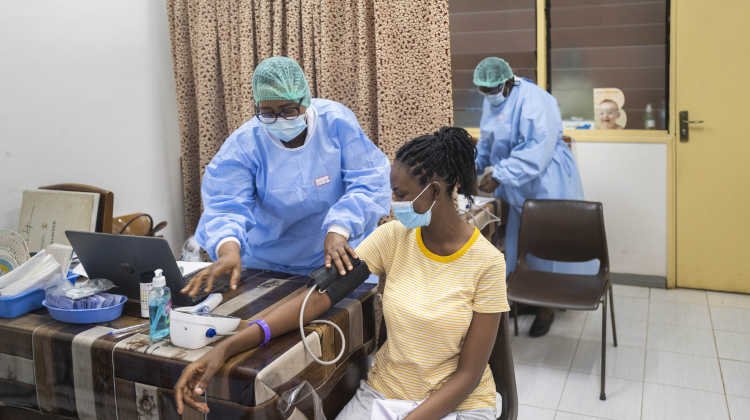
Photo source: United Nations