






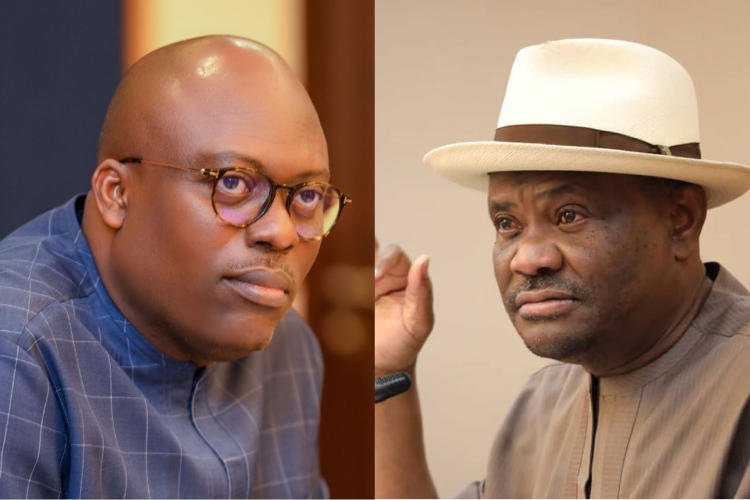
The Rivers State House of Assembly has suddenly remembered that real people are living in Rivers State, and with presidential intervention hanging in the air like early-morning Port Harcourt humidity, lawmakers have halted the Nyesom Wike-triggered impeachment proceedings against Governor Siminalayi Fubara and his deputy, Ngozi Odu.
Development Diaries reports that the lawmakers have, all along, been carrying out the bidding of the Federal Capital Territory (FCT) minister, who has essentially treated Rivers’ politics like his private business franchise.
So, the key issue here is, painfully, that the political crisis in Rivers State had nothing to do with protecting public interest, but those of the gladiators.
Recall that a 2025 analysis by BusinessDay showed that investors either adopted a ‘wait-and-see’ posture or quietly moved their capital elsewhere due to the crisis.
With President Bola Tinubu’s call to order, the lawmakers suddenly found their brakes and are now backtracking faster than a student caught cheating in an examination hall.
When agreements among political elites start shifting overnight like sand in Bonny Island, it becomes clear these leaders are guided not by the constitution but by political IOUs.
The failing system here is governance itself, because of the basic social contract that says leaders should serve the people and uphold the constitution. Instead, institutions meant to check and balance one another are being weaponised for political power struggles.
Why is it failing?
Political loyalty continues to trump accountability, autonomy, and justice, with Rivers institutions, from the House of Assembly to the judiciary, finding themselves walking tightropes, pressured by competing political camps while trying to maintain the illusion of independence.
The duty bearers here are elected officials whose salaries are funded by taxpayers. Leaders such as Governor Fubara and Wike, whose influence looms over the crisis; the Speaker and members of the Rivers State House of Assembly; President Tinubu, whose intervention created this pause; and the Rivers State Chief Judge, Justice Simeon Amadi, who is navigating court orders like landmines, have failed to uphold citizens’ rights to good governance, stability, and public service delivery.
And when political elite wars disrupt those rights, the state is failing in its obligations under national and international human rights commitments, including the duty to ensure equitable access to development and security.
Additionally, this crisis is far from over, as the underlying issue of power control between Fubara and Wike remains unresolved. The presidential intervention simply pressed ‘pause’, not ‘reset’, and where politically exposed persons operate in shadows rather than transparency, citizens must expect more twists.
Against this background, the people of Rivers must demand that governance cannot continue as collateral damage in elite power struggles. They must insist on accountability through civic engagement, town halls, legislative monitoring, budget scrutiny, community-led advocacy, and active participation in policy conversations.
Communities should demand clarity on decision timelines and service delivery performance, especially now that political distractions have slowed governance. As for young people, women, girls, and persons living with disabilities, they must not be sidelined in this conversation because they are often the first to feel the heat when public services freeze.
So yes, impeachment has been paused, but the Rivers people must not be deceived into thinking that the storm has passed, as the clouds are simply rearranging themselves.
This also means calling on your members of the House of Assembly to explain how they are representing your constituencies, demanding public briefings from the governor on how the crisis affects service delivery, and insisting that local government chairmen speak openly about how instability is affecting communities.
Above all, the key lesson for the people of Rivers State is that active participation in governance must go beyond voting, because responsible citizenship does not end on election day.
Political peace without citizen-centred governance is nothing more than a well-decorated empty house, and the Rivers people deserve a home with real foundations.