



Nearly N98 billion set aside to support basic education in Nigeria is sitting idle because many state governments have failed to meet the matching grant requirements to access the funds.
Development Diaries reports that in a country already battling what global agencies describe as an education emergency, this is a governance failure playing out at the expense of millions of children.
The funds in question come through the Universal Basic Education Commission (UBEC), a system designed to ensure that both federal and state governments invest in the future of Nigeria’s children.
Under the framework, which is a model built on shared responsibility, states are required to match federal contributions before accessing the grants.
But what happens when one side simply refuses to show up?
Nigeria currently has about 18.5 million out-of-school children, the highest number anywhere in the world, and this is a reflection of millions of interrupted dreams, delayed futures, and a growing population of young people left without the basic tools to navigate life.
For Development Diaries, this is a story we have returned to repeatedly, calling attention to how gaps in governance continue to widen the cracks in Nigeria’s education system.
What makes the situation even more troubling is that the legal framework is clear enough, with the Child’s Rights Act and the Universal Basic Education Act both making provisions for free and compulsory education at the primary and junior secondary levels.
These are legal commitments that governments at all levels are expected to uphold. Yet, years after these laws were enacted, millions of children are still out of school, and funds meant to address this very issue remain untouched.
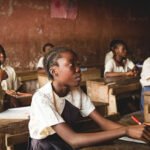
Meanwhile, the consequences are anything but abstract. In many communities, classrooms remain overcrowded, with some pupils learning under trees or in dilapidated buildings. Teachers are overstretched, learning materials are scarce, and in some cases, schools are simply too far away or too unsafe for children to attend.
For families already struggling with poverty, the absence of functional public education systems pushes children further out of school and into labour, early marriage, or other vulnerabilities.
At the centre of this failure are clear duty bearers who must be named and held accountable. State governors, who control education budgets and are responsible for providing counterpart funding, must explain why funds meant for children are left untouched while education systems deteriorate.
Commissioners for education at the state level must account for how they are prioritising basic education and what steps they are taking to ensure these funds are accessed without delay.
Citizens should not watch this quietly. They should demand that their state governors immediately release counterpart funding to access the available grants, public timelines and regular updates on how these funds will be used to improve schools in their communities, and insist that state assemblies exercise oversight and question why education funds are being left idle while children remain out of school.
Citizens must also turn their attention to the National Assembly, where proposed amendments to the UBE Act are currently awaiting passage in both the Senate and the House of Representatives.
These amendments are expected to introduce stronger monitoring mechanisms and a results-based framework that rewards states with additional resources when they meet clear education outcomes.
Nigerians should demand that lawmakers treat this as an urgent national priority by fast-tracking the passage of these amendments, demand public hearings that allow citizens to engage with the proposed reforms, and insist that the final law includes clear accountability measures that ensure funds translate into real improvements in classrooms, not just figures on paper.
Every year that these funds remain unused is another year that millions of children fall further behind. And in a country where the youth population continues to grow, the long-term implications for economic development, social stability, and national security cannot be ignored.
Photo source: Doug Linstedt