



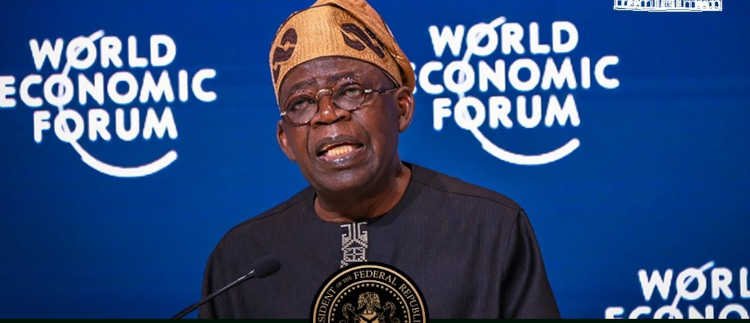
President Bola Tinubu’s announcement that Nigeria has met its 2025 revenue target four months ahead of schedule may sound impressive on paper, but it raises pressing questions about the lived reality of ordinary citizens.
Development Diaries reports that according to the president, from January to August 2025, total collections reached N20.59 trillion, a 40.5 percent increase from N14.6 trillion recorded in 2024.
He noted that the economy is now stabilised and that nobody is trading pieces of paper for foreign exchange anymore.
While such figures suggest stronger fiscal performance, they appear disconnected from the prevailing hardship across the country.
Data from the National Bureau of Statistics (NBS) shows that while Nigeria’s annual inflation rate eased in July to 21.88 percent from 22.22 percent in June, food inflation, a key driver of the headline rate, stood at 22.74 percent year on year in July compared with 21.97 percent the month before.
The central issue is not whether revenue targets have been met, but whether these revenues are translating into meaningful improvements in the quality of life for Nigerians.
Opposition parties and analysts alike have argued that celebrating revenue milestones amid widespread economic distress highlights a troubling disconnect between government rhetoric and citizen experience.
For instance, the African Democratic Congress and the NNPP have both questioned how revenue achievements can be meaningful when the naira continues to struggle in the foreign exchange market and inflation remains unrelenting.
Under such conditions, increased government revenue means little to citizens who are still unable to afford food, healthcare, and education.
Even more concerning is the president’s assertion that the government has stopped borrowing locally, a claim disputed by economists.
Financial experts have stressed the need for clarity on whether the president is referring to halting new borrowing or simply keeping within the budget deficit limit of N13 trillion.
The deeper problem lies in the absence of visible impact.
Revenue growth in isolation is not progress; progress is measured by whether the additional funds ease poverty, reduce unemployment, and restore dignity to citizens.
Development Diaries calls on President Tinubu to move beyond revenue chest-thumping and demonstrate how these funds are easing the burden on Nigerians.
The Ministry of Finance and the Debt Management Office must also clarify the government’s borrowing position to rebuild public trust.
Achieving revenue targets is only meaningful if it translates into reduced poverty, lower inflation, and restored dignity for citizens.