





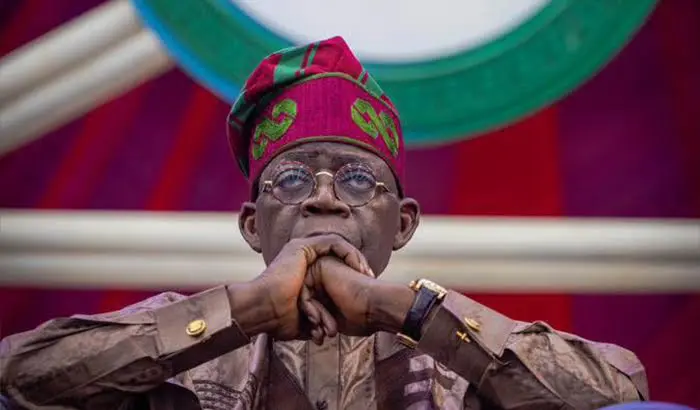
As President Bola Tinubu celebrates an economic ‘turnaround’ and says state governors no longer borrow from banks to pay salaries, many Nigerians struggling with rising food prices, transport costs, and daily living expenses are still waiting to see how that recovery is improving their lives.
Development Diaries reports that the president recently stated that Nigeria had overcome economic challenges under his administration, stressing that state governors no longer seek bank loans to pay salaries.
The president made the statement while hosting religious and traditional leaders during an interfaith breaking of fast at the Presidential Villa in Abuja, assuring Nigerians that the country had overcome the most difficult economic period and avoided bankruptcy.
In fact, if Nigeria’s economy were a student writing an exam, ‘we survived’ would at least mean it did not completely fail the course.
But if the economy has survived, are ordinary Nigerians living better? In the Nigerian economy, survival has a curious habit of stopping somewhere between government press statements and the price of food in the market.
The president’s claim that governors no longer borrow to pay salaries suggests improved fiscal stability in the states. That is important because workers deserve to be paid on time without their employers visiting the bank like desperate relatives asking for emergency loans.
Yet paying salaries regularly is only the starting point of economic governance, not the finish line. A salary paid on time still loses value when inflation rises faster than incomes.
Nigeria’s inflation remains stubbornly high, and the cost of living continues to squeeze households. Transport fares have climbed sharply since fuel subsidy removal; food prices have turned market visits into budgeting competitions, as many young Nigerians still search for jobs in an economy that promises growth but delivers uncertainty.
So the bigger issue raised by the president’s statement is whether the improved government balance sheets automatically translate into better livelihoods for citizens.
Economic reforms often require patience, and governments sometimes ask citizens to endure short-term hardship for long-term stability. But when hardship stretches longer than expected, people begin to ask whether the promised destination is still ahead or whether the bus has quietly changed route.
This is why economic progress must be measured not only by macroeconomic indicators but by the everyday realities of citizens.
President Tinubu must ensure that economic reforms deliver tangible benefits to households, while state governments, which now reportedly enjoy improved fiscal space, must use increased revenues to strengthen social services, infrastructure, and job creation.
On its part, the Central Bank of Nigeria (CBN) must continue stabilising the financial system and managing inflation so that citizens’ incomes retain their value, while the National Bureau of Statistics must provide transparent data that allows Nigerians to verify whether economic improvements are reaching people beyond government offices.
This conversation is also a rights issue, as Nigeria has committed itself to international human rights standards that recognise economic and social rights, including the right to an adequate standard of living.
These commitments require governments to ensure that economic policies protect citizens from extreme poverty, hunger, and exclusion.
So when citizens struggle to afford food, healthcare, education, or transportation, the issue becomes a question of whether public policies are meeting the state’s obligations to protect human dignity.
And as always, the impact of economic hardship is never evenly distributed, with women who run small businesses often facing rising costs without access to credit or support, and young people entering the labour market face limited opportunities in a slow job environment.
For their part, persons with disabilities encounter additional barriers when public services and economic opportunities are not designed with inclusion in mind.
Even pensioners, whom the president said are gradually receiving relief, measure economic progress in a simple way of whether their monthly payments can still buy basic necessities.
So what should citizens expect if the economy has truly turned the corner?
First, they should demand evidence. Government institutions must publish clear data showing improvements in employment, inflation reduction, food affordability, and income stability.
Second, citizens should expect state governments to invest increased revenues in services that improve daily life. If governors are no longer borrowing to pay salaries, citizens have every right to ask where the savings are going.
Third, social protection systems must expand to protect vulnerable groups. Programmes supporting women entrepreneurs, youth employment, and persons with disabilities must receive adequate funding and implementation.
Every Nigerian should engage their elected representatives to demand transparency in how public funds are used, while civil society organisations and community groups can track government spending and monitor whether economic reforms are producing real improvements in public services.