




In Sudan today, survival is about avoiding the growing risk of being picked up, detained, and disappearing without a trace in a war where civilians have become easy targets for control.
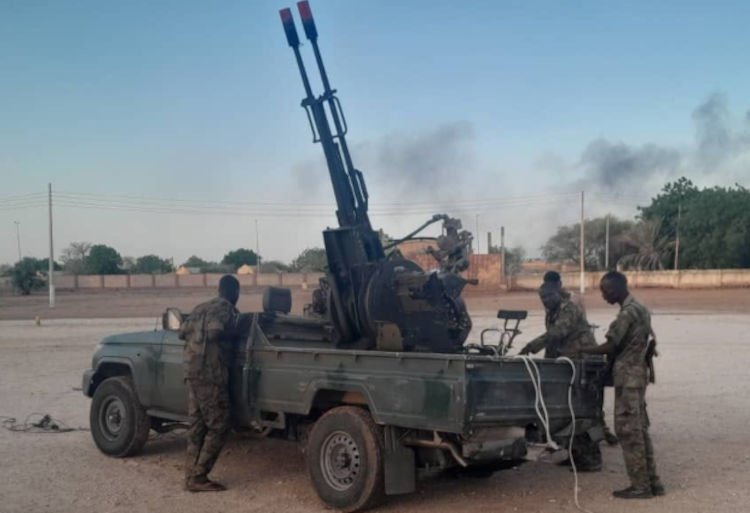
Development Diaries reports that as the country’s civil war enters its third year, Human Rights Watch (HRW) has documented the arbitrary detention of civilians by both the Sudan Armed Forces and the Rapid Support Forces.
This is about a country where the idea of civilian protection has packed its bags and left the building, while two armed groups now act as judge, jury, and jailer at the same time.
What makes this even more troubling is that what the HRW has documented is only a small piece of a much bigger puzzle, as Sudan’s communication systems are barely functioning, civil society groups have been scattered, and those who would normally track these abuses are either in hiding or in exile.
So the cases we know are just the ones that managed to find their way into the light.
To understand how things got this bad, you have to go back a bit. Sudan once had a fragile attempt at shared governance through the Transitional Sovereignty Council after the 2019 revolution.
It was not perfect, but at least there was something resembling civilian oversight. That arrangement collapsed, and what followed was a full-blown struggle for power between the same forces that were supposed to protect the country.
Since then, the institutions that should hold power accountable have either weakened or disappeared. The United Nations Security Council has been slowed down by global politics, the International Criminal Court has outstanding cases that remain unresolved, and the African Union has yet to secure a lasting ceasefire.
Those most affected are not fighters on the frontlines but civilians trying to survive in the middle of it all, and these include people caring for children, elderly parents, or injured relatives.
Women face an even heavier burden, as reports point to risks of sexual violence in detention, a pattern that is sadly not new in Sudan but continues to repeat itself.
At this point, it would be easy for the rest of the world to look away and say, ‘This is Sudan’s problem’. But that would ignore the basic truth of arbitrary detention being a violation of fundamental human rights that countries across the world, through international agreements, have promised to uphold.
So the question becomes who is responsible?
The answer starts with the Sudan Armed Forces and the Rapid Support Forces, both of whom are directly carrying out these detentions. International and regional bodies also have a role to play, inclduing creating real consequences for actions that continue unchecked.
For citizens across Africa and beyond, this is also a moment to pay attention and use whatever platforms are available to demand accountability. Following credible reporting, supporting Sudanese civil society groups, and pushing governments to take clear positions are small but necessary steps in keeping the issue visible.
Ultimately, what is happening in Sudan is about what happens when a country loses the systems meant to protect its people.
Photo source: Dabanga