




United Nations International Children’s Emergency Fund (UNICEF) says nearly 50,000 people, primarily in Gedaref and Kassala states in Sudan, need refuge.
These people left their country, Ethiopia, due to the unrest in the Tigray region.
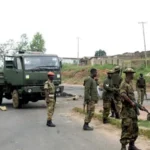
Violence involving federal and local forces erupted in Tigray following the reported takeover of an army base in the Tigrayan capital, Mekelle.
On 4 November, 2020, the country’s Prime Minister, Abiy Ahmed, ordered the Ethiopian Defence Forces (EDF) to attack the Tigray Regional Paramilitary Police and militia loyal to the TPLF.
Since the start of the conflict, there have been armed confrontations between federal forces on one side and the Tigray regional forces on the other side.
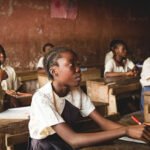
UNICEF said in a statement that an estimated 22,000 children have made the arduous journey to the border and now face mounting uncertainty for their future.
The UN agency noted that its partners are working closely with the transitional government to rapidly respond to the increasingly complex needs of refugees and the communities that host them in the country.
‘To date, UNICEF has provided clean water for 21,500 people; safe sanitation facilities for 12,700 people; 228 unaccompanied and separated children have so far been identified for referrals and more than 8,200 children under five have been screened for malnutrition at border entry points’, the statement read.
‘In addition, UNICEF and the Ministry of Health have begun screening refugee children for inclusion in a nationwide polio immunization campaign’.
The UN Office for the Coordination of Humanitarian Affairs (UNOCHA) had earlier reported that it was impossible for humanitarians to get vital supplies into Ethiopia’s Tigray region due to the disruption of telephone lines and transport links.
At the time, there were some 600,000 food beneficiaries in the region, about 100,000 internally displaced persons, and some 96,000 refugees, according to UNOCHA.
‘With the road closed, food, health, and other emergency supplies have currently no way to make it into Tigray making prepositioning or re-stocking impossible’, it said in a statement.
‘Telephone lines remain cut making information flow and corroboration of media reports very difficult for the humanitarian community, as well as to monitor population movement and additional humanitarian needs’.
Source: UNICEF
Photo source: UN Humanitarian

