





Security reform in Nigeria cannot be reduced to swearing-in ceremonies and confident declarations without asking the citizens what kind of policing they actually want.
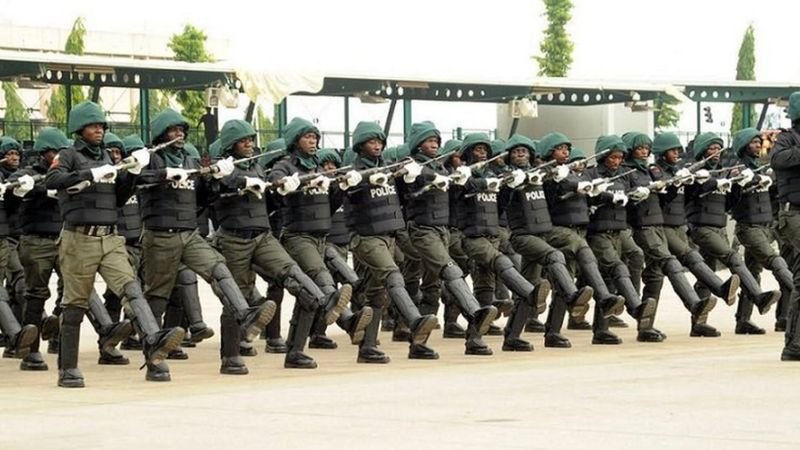
Development Diaries reports that the new Inspector-General of Police (IGP), Olatunji Disu, on Wednesday declared shortly after his swearing-in that ‘state police has come to stay’.
The argument is that Nigeria faces growing security threats, the federal police structure is overstretched, and decentralising policing will bring law enforcement closer to communities.
On paper, that sounds reasonable, but the deeper question is whether Nigeria’s political system is mature enough to handle it without turning it into a new tool of political control.
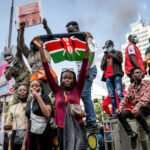
Nigeria already has one police force struggling under centralised authority. Citizens know how that story has often gone, with protesters sometimes meeting tear gas before dialogue, journalists sometimes meeting intimidation before protection, and victims of crime sometimes meeting paperwork before justice.
So when a new policing system is proposed, citizens are right to ask whether the reform will fix the problem or simply multiply it across 36 states.
At the centre of the story is a system that has long struggled with accountability. Nigeria’s policing architecture, as defined by the 1999 constitution, places the police under federal control.
Yet insecurity from banditry to communal violence continues to expose the limits of that structure, as communities complain that officers posted from faraway states often lack local knowledge, while police authorities complain that they lack resources and personnel.
Everyone agrees there is a problem, but what Nigerians do not yet agree on is whether state policing is the solution.
In a political environment where governors already wield enormous influence, many citizens worry that state police could become what critics politely call ‘governor’s police’ and what ordinary Nigerians might call ‘armed political assistants’.
The concerns are especially serious as the country approaches the 2027 elections. Nigeria’s police are constitutionally responsible for protecting voters, electoral officials and democratic institutions. Yet election seasons have historically been moments when neutrality becomes a difficult test.
That is why the promise by Disu to enforce zero tolerance for partisanship sounds encouraging but incomplete because systems require laws, oversight and public trust.
The duty bearers responsible for getting this right are President Bola Tinubu and the National Assembly. The executive branch must ensure that any constitutional amendment on state police emerges from transparent national consultations, not quiet political consensus.
The National Assembly must resist the temptation to treat the issue as a technical amendment rather than a major democratic reform, and governors must publicly commit that state policing will not become a political enforcement tool.
And the Nigeria Police Force itself must confront its own credibility crisis, one that cannot be solved by new committees alone.
Beyond politics, this is also a human rights issue. Under Nigeria’s constitution and international obligations, including commitments under the United Nations human rights framework and the African Union system, the state has a duty to guarantee citizens’ right to life, safety, and freedom from abuse by security forces.
Policing reforms must therefore strengthen accountability by enabling citizens to report police abuse without fear, while independent complaint mechanisms must exist at federal and state levels.
The reform must also reflect the realities of those who often suffer the most when policing systems fail. These are women and girls who face gender-based violence that frequently goes underreported because victims do not trust law enforcement.
For their part, young people are often treated with suspicion rather than protection, while persons with disabilities frequently encounter barriers when seeking justice.
Citizens should ask their representatives in the National Assembly where they stand on state police and what safeguards they will support. Civil society organisations and community groups can organise public discussions so that ordinary Nigerians understand what the reform means.
So, before the phrase ‘state police has come to stay’ becomes official doctrine, Nigerians deserve something more democratic than announcements.
