






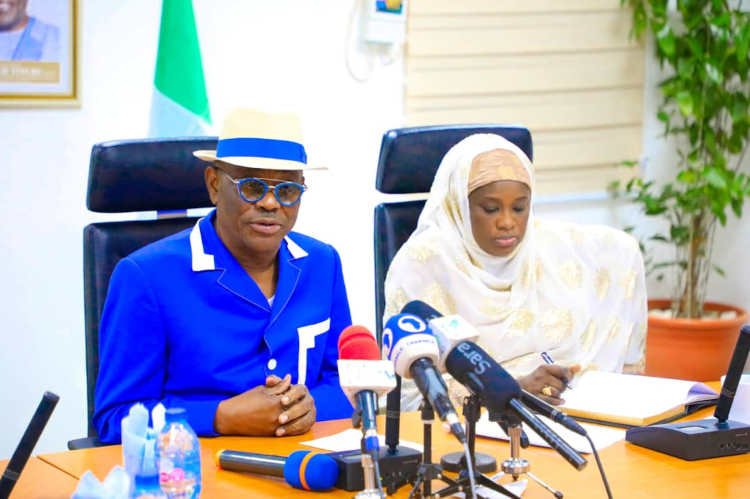
The mounting allegations against the Minister of the Federal Capital Territory (FCT), Nyesom Wike, ranging from questionable land allocations in Abuja to property acquisitions in Florida, raise deeper questions beyond trending debates on social media.
Development Diaries reports that Sahara Reporters, in a recent exposé, revealed that according to a Quit Claim Deeds, Wike, and his wife, Eberechi Suzette Nyesom-Wike, a Court of Appeal judge, transferred their properties in Florida, United States, into the names of their children between 2021 and 2023.
Reports by Peoples Gazette suggest that since assuming office in 2023, Wike allegedly signed off on over 2,000 hectares of Abuja’s most valuable land, worth an estimated $3.6 billion to his son and close relatives, bypassing regulations and key payments.
Additional documents reveal allocations to over a dozen family members, including a 90-year-old father and distant cousins, raising questions about abuse of office and the weaponisation of public trust.
When a minister entrusted with safeguarding the nation’s capital allegedly treats it as a private estate, citizens should be asking not just ‘if it is true’ but ‘what systems failed to make this possible?’
The Florida properties, valued at over $2 million and acquired through his wife and children, deepen the concern.
With an official annual income of roughly N7.8 million, there is no legitimate pathway to such acquisitions without recourse to undeclared funds.
The fact that Justice Eberechi Wike, his wife, is reportedly registered with the U.S. Democratic Party also raises red flags, suggesting a breach of Nigeria’s judicial code of conduct which prohibits judges from partisan political affiliations.
Coupled with petitions already filed in the U.S. alleging money laundering, these developments demand urgent investigation, not silence or political shielding.
For this reason, institutions like the Economic and Financial Crimes Commission (EFCC), Independent and Corrupt Practices Commission (ICPC), and Code of Conduct Bureau must act decisively.
Development Diaries calls on citizens to connect this case to the broader fight for accountable governance. If leaders can quietly move wealth across borders with little scrutiny, then anti-corruption campaigns remain hollow.
Citizens should therefore demand institutional accountability, stronger asset declaration systems, public registers of beneficial ownership, and enforceable sanctions when leaders are found wanting.
Citizens must insist that leaders explain the sources of wealth and provide evidence that such acquisitions were made legitimately, free from the shadow of corruption or abuse of public office.
Social media outrage has its place, but without concrete citizen pressure on institutions to act, stories like this risk becoming yet another cycle of noise without justice.