


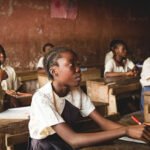



About 7.74 million people or 62.7 percent of South Sudan’s population could face acute food insecurity within the April–July lean season, three agencies of the United Nations (UN) have warned.
In their latest Integrated Food Security Phase Classification (IPC) analysis, the Food and Agriculture Organisation (FAO), the United Nations Children’s Fund (UNICEF) and the World Food Programme (WFP) renewed the call for more humanitarian and livelihoods assistance to stave off looming hunger and enhance resilience.
South Sudan descended into a bloody seven-year civil war in 2011. Although a peace deal was inked by warring parties in 2018, fighting between communities has continued.
‘We are extremely concerned with the findings that point to a continued deterioration in the food security situation and a sharp rise in the number of people facing hunger’, acting Country Director for WFP South Sudan, Adeyinka Badejo, said in a statement.
More than four million South Sudanese have since been displaced with nearly two million people displaced outside of the country.
Climate shocks have also contributed to the worsening situation as data from FAO suggests that about 65,000 hectares of cultivated land have been damaged due to flooding.
‘FAO is concerned by the rising number of food-insecure people driven by the additional burden of heavy flooding that has occurred in the country for the last three consecutive years’, FAO Representation in South Sudan, Meshack Malo, noted.
‘To tackle acute hunger, we need to produce more food where it is needed most. FAO will continue to provide seeds, tools and fishing kits to people in urgent need of assistance.
‘We also need increased investment to allow us to find innovative ways to help South Sudanese farmers adapt to climate change so they can grow enough food to meet their nutritional requirements’.
The UN agencies also documented the impact of the crisis on children, noting that 1.34 million children under the age of five suffered from acute malnutrition in 2022.
‘As the access to those in need improves due to the peace process, we have been making significant progress in treating severe malnutrition in children, but floods and other climate-related shocks leave more children vulnerable’, the statement quoted the UNICEF Representative in South Sudan, Jesper Moller, as saying
‘More than 90 percent of children under five put into therapeutic feeding programmes fully recover, and yet funding for this life-saving response is increasingly a challenge’.
In their united call for humanitarian aid, FAO, WFP, and UNICEF emphasised the importance of the continued implementation of the peace agreement to address the root causes of insecurity across the country.
Source: WFP
Photo source: WFP