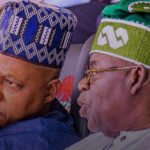

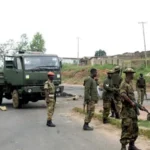



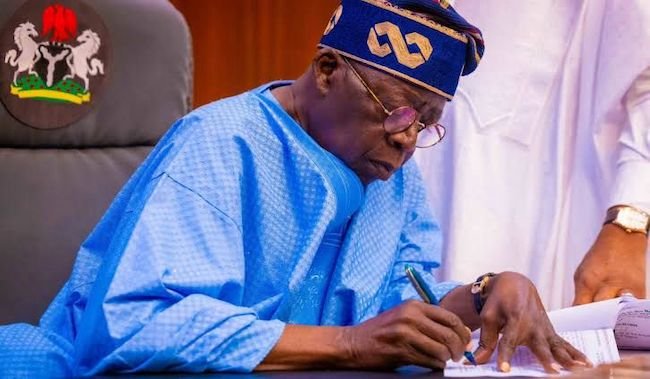
When President Bola Tinubu leaves Jos, Plateau State, after his visit, the real question is whether anything will change or if the city is simply being prepared for the next condolence tour.
Development Diaries reports that President Tinubu is set to visit the north-central state four days after the deadly attack that claimed 28 lives and left 22 injured.
In a country where violence has become painfully familiar, a presidential visit is no longer the headline, but what happens after the cameras leave, the handshakes end, and the speeches are delivered.
The killings in Jos have once again exposed the fragile security reality in Plateau State, where cycles of violence linked to land, identity, and resource tensions continue to erupt with troubling regularity.
Each time, the response follows a predictable script of condemnation, deployment, investigation, and then silence. This visit, coming after public criticism over delayed empathy, now places a different kind of responsibility on the president.
The right to life and the right to security are not negotiable, as they are guaranteed under Nigeria’s constitution and reinforced by international obligations.
When citizens are killed in public spaces and communities are left vulnerable, it is a failure of duty, and that duty rests squarely with those entrusted with protecting lives.
So what must happen after this visit cannot be vague or symbolic but specific, measurable, and immediate. The president must move beyond directives and ensure that security strategies in Plateau State are proactive, not reactive.
This means strengthening intelligence systems so that threats are identified before they turn into attacks, ensuring that security agencies are deployed after violence and consistently present in high-risk communities.
The Nigeria Police Force and the Nigerian Armed Forces must be held to a higher standard of coordination and accountability, because when reports suggest that warnings existed before the attack, it raises serious concerns about how intelligence is being handled.
After this visit, there must be a clear review of what went wrong, not hidden behind internal memos, but shared with the public because transparency is an obligation.
The role of Governor Caleb Mutfwang also becomes even more critical in the aftermath. Beyond managing immediate tensions, the state government must invest in long-term peacebuilding.
Also, the recurring nature of these attacks shows that underlying issues, particularly disputes over land and identity, have not been adequately addressed. Without deliberate and sustained conflict resolution efforts, any calm achieved will remain temporary.
This is also where federal institutions responsible for internal security and conflict management must step in more effectively. A coordinated national approach is needed, one that does not treat each outbreak of violence as an isolated incident but as part of a broader pattern requiring systemic solutions.
Citizens, on their part, must not allow this visit to close the conversation. They must demand clear, time-bound actions from the government. What concrete steps will be taken in the next weeks to secure vulnerable communities? What measures will be implemented to address the root causes of these conflicts? What accountability mechanisms will ensure that failures in intelligence and response are corrected?
There is also a need to look at how this violence affects different groups, with women and children often carrying the invisible weight of such crises, facing displacement, loss of livelihoods, and increased vulnerability in already fragile conditions.
On their part, young people, many of whom are already navigating uncertainty, are further exposed to trauma and, in some cases, drawn into cycles of violence. When security systems fail, these impacts deepen existing inequalities, making it a security issue and a question of fairness and protection for all.
So, if this visit is to mean anything, it must mark a turning point where promises are followed by action, investigations leading to justice, and prevention becoming more important than reaction.
Otherwise, the next time violence erupts, and history suggests that it might, the question will not be whether the president will visit again, but whether anything was ever truly done after the last one.