


President Bola Tinubu’s media team has again missed a crucial opportunity to engage the public with transparency by dodging legitimate questions raised by former presidential candidate Peter Obi on how subsidy savings are being managed.
Development Diaries reports that Obi, in a TV interview, had demanded transparency on the billions supposedly saved since the removal of petroleum subsidies, challenging the government to show Nigerians where the funds were invested.
He also argued that the controversial subsidy should have been phased out gradually, rather than being scrapped overnight.
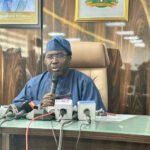
But in his response, Special Advisor to the President on Policy Communication, Daniel Bwala, described Obi as ‘shallow’ and unfit to discuss economic and governance matters.
In a democracy, opposition voices serve as a vital check on power, and citizens are entitled to ask how public resources are managed, especially when the government claims to have saved trillions.
Rather than provide clarity, the presidency launched personal attacks, branding Obi ‘shallow’ and ‘desperate’.
This hostile response shows a dislike for being held accountable and creates a dangerous situation where honest questions are answered with insults instead of clear information.
Obi’s criticism that the removal of fuel subsidy was rushed and poorly implemented is echoed by economists and ordinary Nigerians alike.
While he acknowledged that the policy was necessary, his demand is rooted in logic: if subsidy removal has supposedly saved the country over four trillion naira annually, where is the evidence of that reinvestment?
According to the Nigeria Extractive Industries Transparency Initiative (NEITI), Nigeria spent N13.7 trillion on subsidies between 2005 and 2021.
The justification for ending this drain was to fund critical infrastructure and reduce borrowing. Yet, the government is now seeking approval to borrow an additional $21.5 billion, a contradiction that demands explanation.
Experts like Paul Alaje and Sherifdeen Tella have reinforced these concerns, warning that without significant reforms, Nigeria risks facing the same socioeconomic crises, poverty, unemployment, and underdevelopment in the next two decades.
Tella specifically questioned the logic of incurring new debts when federal and state allocations have reportedly surged since the subsidy was scrapped.
He urged authorities to utilise these gains for real development instead of overburdening the economy with more loans.
The government’s refusal to transparently account for subsidy savings weakens public trust and discredits the rationale for the policy.
Nigerians are bearing the brunt of higher transportation fares, inflation, and worsening living standards. In this context, a hostile response to calls for transparency appears arrogant.
Development Diaries calls on the presidency to back its rhetoric with data, invite scrutiny, and abandon the habit of attacking critics who dare to demand answers.