





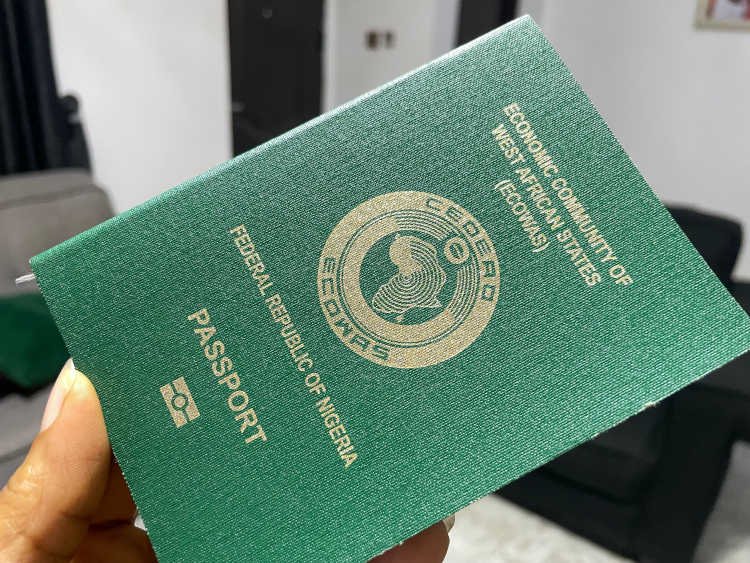
It is deeply troubling that in a country where the new minimum wage is N70,000, the federal government has again raised the cost of the Nigerian passport, making Nigeria one of the few places in the world where obtaining a travel document costs more than a worker’s monthly salary.
Development Diaries reports that the Nigeria Immigration Service (NIS) recently announced that the fees for the Nigerian passport have been increased, effective September 1, 2025.
According to the spokesman for the NIS, Sheriff Akinlabi, the increment aims to ensure the quality and integrity of the Nigerian Standard Passport.
With the cost of a 32-page passport now pegged at N100,000 and the 64-page booklet at N200,000, Nigeria has made its passport one of the most expensive on the continent, especially for domestic applicants.
This move stands in sharp contrast to nations like Kenya and South Africa, where passports are not only more affordable but also come with longer validity periods.
Across Africa, passport costs remain far more affordable than Nigeria’s new rates. Kenya issues a 32-page passport valid for ten years at just $44 (N67,615), South Africa charges R600 (N48,000) for a ten-year passport, while Tunisia’s fee is as low as $20 (N31,000).
Even countries like Morocco, Gambia, and Zimbabwe keep their prices between $50 and $61 (N75,000–N90,000).
Compared to these, Nigeria’s N100,000 fee for a five-year passport and N200,000 for ten years place it among the costliest on the continent, despite offering shorter validity amid harsher economic realities for its citizens.
The Nigerian case is particularly troubling because the hike comes amid severe economic hardship, inflation, and a new minimum wage of N70,000, meaning that the cost of a standard passport now surpasses the average worker’s monthly salary.
While the government justifies the increase on grounds of improved security features, technological upgrades, and administrative reforms, Nigerians remain sceptical.
Development Diaries calls on Minister of Interior, Olubunmi Tunji-Ojo to adopt a tiered pricing system with reduced rates for students, low-income earners, and first-time applicants while maintaining premium charges for expedited or business-class services.
This balances revenue needs with social equity. Additionally, government can explore public–private partnerships to spread infrastructure costs without transferring the full burden to citizens.