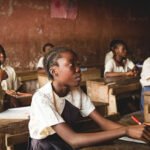

Three presidential candidates for Nigeria’s 2023 elections have made promises on how to address the menace of out-of-school children in the country.
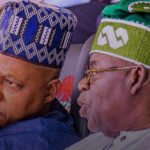
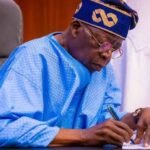
Atiku Abubakar of the People’s Democratic Party (PDP), Peter Obi of the Labour Party (LP) and Rabiu Kwankwaso of the New Nigeria People’s Party (NNPP) made their promises during a townhall organised by Arise TV in collaboration with Centre for Democracy Development (CDD).
The problem of out-of-school children is a growing concern in Nigeria on which development experts are calling for workable solutions.
SDG Four: Ensure inclusive and equitable quality education and promote lifelong learning opportunities for all
The United Nations Educational, Scientific and Cultural Organisation (UNESCO) recently announced that Nigeria has about 20 million out-of-school children, the highest in the world.
As for the Universal Basic Education Commission (UBEC), an intervening agency of the Nigerian government, the number of out-of-school children between the ages of six and 11 in the country is 10.1 million based on its 2018 National Personnel Audit (NPA) report.
Candidates make promises
When asked what they intend to do to tackle the outrageous number of out-of-school children in the country, Atiku said he will ensure that additional funding is provided for the northern states where the number is higher to reduce the figure.
‘I tried to do that when I was vice president, particularly in the northern states. I commissioned a special study which was made by a committee’, he said.
‘As a result, they produced a handbook on how the northern states can catch up as far as education is concerned.
‘We are not investing enough in education; it requires real additional funding and infrastructure to bring down the numbers as far as the northern states are concerned’.
As for the LP candidate, Obi, he said Nigeria’s budget will be designed differently in order to accommodate more funding for education.
He noted, ‘If we work hard in this country, we will be able to get a revenue of N15 trillion annually; we can borrow ten trillion naira and not throw away monies to subsidy and other areas.
‘We need about N25 trillion budget to start with, hence if we curtail the cost of governance, ten percent of that should go to education and 10 percent to other areas’.
On his part, the NNLP candidate, Kwankwaso, promised to encourage private sector investments in education.
‘We believe more investments should be made in education, we will encourage private people to set up primary, secondary and tertiary facilities’, he said.
It should be noted that Nigeria’s annual monetary allocations to education have been less than the 15 percent minimum recommended by UNESCO.
Adopted as a human right by the United Nations, basic education is the bedrock of formal learning that ‘transforms lives, eradicates poverty and drives sustainable development’.
Citizens should know that for Nigeria to attain SDG four, it must drastically increase the level of public education financing to ensure that its policy to support free and compulsory basic education is effective.
Photo source: Kenya News Agency