


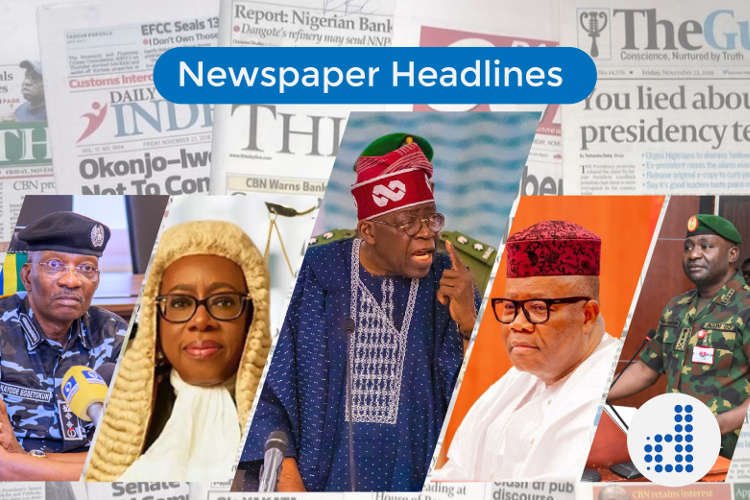
Here is a roundup of some Nigerian newspaper headlines, accompanied by our advocacy-driven demands for government action in addressing citizens’ concerns.
1. Daily Trust: 23 Months after, Queues Persist at CNG Dispensing Points
Long queues have gradually become the new norm in the Federal Capital Territory (FCT), Abuja, and states for drivers who have converted their cars to Compressed Natural Gas (CNG)-powered vehicles.
This has seen many drivers spend hours on queues with many sleeping at the filling stations to get the product.
Our Take: The persistent long queues at CNG dispensing stations, nearly two years after the launch of the Presidential Compressed Natural Gas Initiative (PCNGI), highlight a troubling gap between policy promises and actual service delivery. The Federal Government, particularly the PCNGI Secretariat and the Nigerian National Petroleum Company Limited (NNPCL), must urgently address the infrastructure and supply chain bottlenecks frustrating CNG users.
2. Punch: July Flood Alert: 20 States at Risk Despite N620 Billion Intervention
The Nigerian Meteorological Agency has issued a flood alert for the month of July, warning that states including Sokoto, Lagos, Edo, Benue, and 16 others are at risk of experiencing flash floods.
Findings showed that despite receiving over N620bn in ecological funds, many states seem ill-prepared to mitigate the impact of such disasters, raising questions about the effectiveness of these funds in enhancing environmental resilience and disaster preparedness.
Our Take: With 20 states at risk of flash floods this July despite the disbursement of over N620 billion in ecological funds, the Economic and Financial Crimes Commission (EFCC), the Independent Corrupt Practices and Other Related Offences Commission (ICPC), and the National Assembly Committees on Environment and Public Accounts must urgently launch a comprehensive audit into the use of these funds by state governments. It is critical that state governments are held accountable and compelled to implement concrete, community-based flood prevention measures to safeguard lives and infrastructure from preventable devastation.
3. The Guardian: Tinubu Insists Fuel Subsidy Benefits only Rich Citizens, Unsustainable
President Bola Tinubu has reiterated that the fuel subsidy regime was unsustainable and only beneficial to the affluent Nigerians. Speaking during the opening of a National Conference on Public Accounts and Fiscal Governance, organised by the Public Accounts Committees (PACS) of the Senate and House of Representatives, yesterday,he explained that money saved from the removal of fuel subsidy was being channeled into critical infrastructure, social safety nets, and targeted economic reforms aimed at rebuilding public trust and promoting inclusive development.
Our Take: President Tinubu must go beyond reiterating the unsustainability of fuel subsidy and provide transparent, accessible reports showing how savings are directly improving the lives of ordinary Nigerians. If funds are truly being channeled into infrastructure and social safety nets, citizens, especially the vulnerable, deserve to see and feel the impact.