





The United Nations International Children’s Emergency Fund (UNICEF) and Nigeria’s Ministry of Education have commenced the review of the National Policy on Gender in Basic Education.
Speaking to newsmen in Abuja, the nation’s capital, UNICEF’s Education Specialist, Azuka Menkiti, said the review of the 14-year-old policy was aimed at finding a lasting solution to emerging gender issues.
The policy was launched in 2006 to tackle the challenges of achieving equality in education as expressed in the country’s constitution.
Nigeria’s 1999 constitution, as amended, states that access to quality education is the right of every Nigerian child.
However, research findings still show that development in Nigeria is a gendered exercise, impacting differently on women and men, girls and boys.
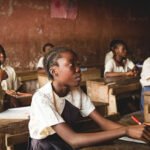
The population of out-of-school children in Nigeria is around 13 million, the highest in the world, according to UNICEF.
Statistics from the UN agency show that 69 percent of these children are in the country’s northern region, and 60 percent of them are girls.
Children drop out of school due to displacement, cultural norms, safety concerns, and unaffordability of scholastic materials, including pens, pencils, schoolbags.
UNICEF, with support from Foreign Commonwealth and Development Office (FCDO), is supporting the Federal Ministry of Education to review the existing policy.
Menkiti said that the review would broaden the scope of the policy, which focused only on basic education, to ensure inclusiveness for better implementation.
‘We felt that we needed to support the government to review it [the policy], especially because there are emerging gender issues affecting enrolment, retention, completion and transition, especially for girls’, Menkiti said.
‘We felt that this is the time to sit down to take a look at the document to see how it fits into emerging issues and how [it is] able to solve the issues that are affecting education for children, both boys and girls’.
Covid-19 has even made it harder for children from poor homes to return to school.
Malala Fund’s recent research shows that 20 million additional secondary school-aged girls around the world may be out of school once the crisis has passed due to increased rates of poverty, household responsibilities and child labour.
‘We have people from universities, primary and post primary schools here to make sure that the content addresses series of gender issues’, Menkiti added.
‘This revised policy will take care of all categories of education, basic, post-basic and tertiary. It is going to be a very comprehensive document that will address all gender issues’.
Also speaking, Ministry of Education Deputy Director, Enakeme Nnorom, said the review was long overdue.
She said when put in place, girls and boys would have quality education because there would be easier access.
Photo source: UNICEF

