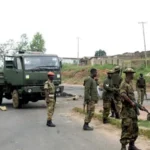






Doctors Without Borders/Médecins Sans Frontières (MSF) has ended its activities in Gwoza and Pulka areas of Borno State, northeast Nigeria.
The humanitarian organisation said it was forced to close its medical activities in Gwoza and Pulka due to security developments in the area and threats to humanitarian workers.
Development Diaries understands that MSF has had a continuous presence in Borno State since 2016, running five hospitals across the state as many were unable to access much needed medical care.
According to the United Nations High Commissioner for Refugees (UNHCR), more than 200,000 Nigerian refugees have fled to Chad, Cameroon and Niger over insurgency in the country’s northeast.
Borno accounts for over 70 percent of displacement in Nigeria, with 1.5 million internally displaced people (IDPs) in the state, according to the International Organisation for Migration.
It is understood that MSF has provided specialised paediatric care, treatment for malnutrition and malaria, maternity care, mental health treatment, surgery, and treatment for survivors of sexual and gender-based violence.
MSF also conducted mass seasonal malaria prevention campaigns during the peak of rainy season.
However, in the past months, fighting in the area has led to changes among the non-state armed groups controlling the area, with the Islamic State West African Province (ISWAP) expanding its influence in the northeast and beyond.
‘Our decision to leave Gwoza and Pulka has been a very painful one. We know it will have devastating consequences for hundreds of thousands of people, who will be cut off from humanitarian aid and healthcare services’, MSF’s Head of Mission in Nigeria, Ahsan Abbasi, said in a statement.
‘However, we need to strike the right balance with acceptable risks to be taken by our staff. From August 2021, MSF will no longer have a presence or staff in Gwoza and Pulka’.
MSF, it was gathered, has been the only NGO with a permanent presence of international staff in Pulka and Gwoza for the past five years.
The organisation added, ‘…should the situation change, we will reassess the security of the ground and the viability to resume operations.
‘We will also continue to provide access to free health care to people in other areas of Borno State, such as in Maiduguri and Ngala. Our social mission to save lives remains unchanged’.
In July this year, MSF suspended its humanitarian operations in Abi-Adi, Axum, and Adigrat towns following the killing of three of its aid workers in Tigray, Ethiopia.
Source: MSF
Photo source: MSF

