



Development Partners Group on Gender (DPGG) has called on all stakeholders to ensure women have equal representation in leadership in Nigeria.
The platform that promotes gender equality and women’s empowerment in Nigeria made the call in its 2021 International Women’s Day (IWD) message.
The DPGG is made up of government agencies, donor organisations, UN agencies, international NGOs, representatives of CSOs and networks promoting gender equality and women’s empowerment in Nigeria.
IWD is a day the world celebrates the social, economic, cultural and political achievements of women.
The 2021 IWD, which is themed ‘Women in leadership: Achieving an equal future in a Covid-19 world’, aims to address the extraordinary hardship that the pandemic has brought to millions of women and girls and their communities.
The human rights group said in a statement that several significant challenges regarding women’s rights still remain in Nigeria.
Nearly three in ten Nigerian women have experienced physical violence by age 15, according to the Nigeria Democratic Health Survey (NDHS).
Also, about 19.9 million girls have experienced female genial mutilation (FGM) in the country, a 2020 report by the United Nations International Children’s Emergency Fund (UNICEF), UN Women, and Plan International revealed.
FGM, according to the World Health Organisation (WHO), involves the partial or total removal of external female genitalia or other injury to the female genital organs for non-medical reasons.
Nigeria has ratified nine of the 13 most significant international human rights conventions, including the Convention on the Elimination of all forms of Discrimination Against Women (CEDAW).
‘A notable milestone is the passing of the Violence Against Persons Prohibition (VAPP) Act in 2015…’, the DPGG statement read.
However, since 2015, only 13 of Nigeria’s 36 states and the Federal Capital Territory (FCT) have adopted the VAPP law.
The VAPP law makes FGM and other forms of gender-based violence like rape, spousal battery, forceful ejection from home, harmful widowhood practices punishable offences.
‘There is a need to advocate domestication of the VAPP Act in all 36 states, to ensure that the rights of all Nigerians are protected’, the statement added.
Another concern raised by the rights group is low representation of women in political leadership positions.
Available data shows that the overall political representation of women in government in Nigeria is less than seven percent.
‘Nigeria is ranked 180 out of 192 countries regarding the percentage of women in parliament, with female legislators currently holding 5.8 and 7.3 percent of the seats in the House of Representatives and the Senate respectively’, it said.
The group also said women make up the majority of frontline workers most impacted by Covid-19, but they are excluded from leadership positions in the Covid-19 response teams at state and federal level.
‘The full inclusion of women in decision making has been identified as one of the key drivers to achieve sustainable development, peace and effective prevention and response to crisis’, the development stakeholders noted.
‘Given the current context of Covid-19 where the need for resilient and inclusive societies has become even more evident, this is not a chance we can afford to lose’.
The DPGG called for the elimination of barriers such as discriminatory social norms and violence against women to ensure women’s equal representation in public life and in decision making.
Source: ActionAid Nigeria
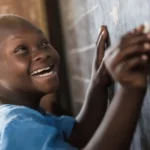
Photo source: UN Women