






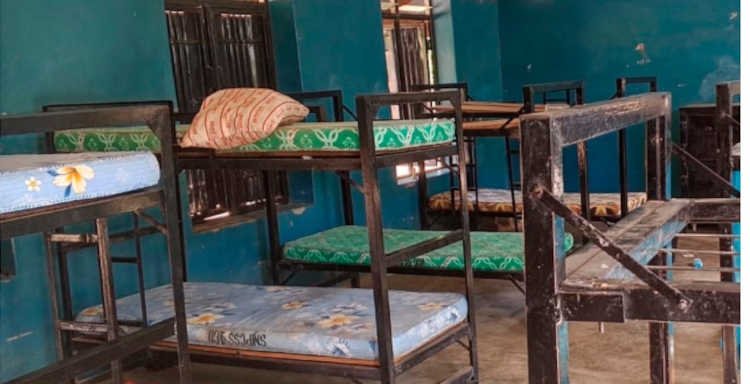
The release of 100 schoolchildren from St Mary’s Catholic School in Niger State brings some relief, but the situation remains troubling if the kidnappers are still at large.
Development Diaries reports that the federal government has secured the release of 100 schoolchildren taken during November’s mass abduction at St Mary’s Private Catholic Primary and Secondary School in Papiri, Agwara local government area of Niger State.
According to media reports, the children were among the 315 people seized when armed men stormed the remote community in Niger State on 21 November. The victims included 303 students and 12 teachers.
The attackers, who rode on motorbikes, invaded the school at about 2 am and operated for nearly three hours, moving from dormitory to dormitory before marching the captives into nearby forests.
It was understood that fifty pupils managed to escape, but 265 victims, including 253 children, remained missing, prompting a national security emergency.
The fact that the attack lasted nearly three hours, and the armed men moved freely from dormitory to dormitory, shows how exposed many schools in rural communities still are.
More than 160 victims, including children and teachers, are still missing.
The government deployed troops, set up a security cordon across border towns, shut down schools, and used aerial surveillance after the abduction.
These are necessary steps, but they should not be temporary reactions. Nigeria cannot continue moving from one mass kidnapping to another.
There must be a stronger, consistent security presence around vulnerable schools, better early-warning systems, and real coordination between local communities and security agencies before kidnappers strike, not only after they have taken children.
Justice also needs real attention. If the armed men escape without being caught, the crime becomes a signal to other groups that they can do the same.
Recent data show that violence and kidnapping in Nigeria are deep‑rooted and widespread. According to data from the National Human Rights Commission (NHRC), between January 2024 and April 2025 there were 3,012 recorded kidnappings and 3,584 killings across the country.
Yet despite this high volume of crime, many abductors remain at large.
The release of 100 schoolchildren, though welcome, came without public disclosure of arrests, identities, or any traceable progress toward bringing anyone to justice.
It is true that security agencies often report large numbers of arrests. For example, between July and September 2024, the police claimed to have arrested 10,852 suspects nationwide for crimes including kidnapping, armed robbery, and banditry, while recovering weapons and rescuing victims.
Also, in the Federal Capital Territory (FCT), 216 kidnapping suspects were arrested in 2024 alone, according to media reports.
However, arrests alone have rarely translated into successful prosecutions of the masterminds behind mass kidnappings.
The common pattern remains: mass abduction, rescue (sometimes after ransom), silence on arrests or judicial outcome, abduction spree resumes somewhere else.
In the absence of publicised convictions in high‑profile cases (like the recent school raid), impunity becomes the rule rather than the exception.
Moreover, mass arrests of small-time suspects or foot soldiers without dismantling criminal networks, the financiers, planners, and kingpins, allow those networks to remobilise quickly. This explains why, despite thousands of arrests, kidnappings and deadly attacks continue unabated.
Freeing 100 children is a relief, but it cannot and must not remain a singular headline. Without arrests, prosecutions and convictions, the government is merely responding, not stopping.
If Nigeria is truly serious about protecting its citizens and deterring future kidnappings, it must ensure that every abductor is hunted down, every criminal network dismantled, and every ransom and network funding trail exposed.
We call on President Bola Tinubu, the National Security Advisor, Nuhu Ribadu, the Chief of Defence Staff, Christopher Musa, the Inspector General of Police and the judiciary to commit to full-scale criminal accountability.
Photo source: Ifeanyi Immanuel Bakwenye/AFP