





The big concern hanging over the new federal government and Academic Staff Union of Universities (ASUU) agreement is whether this would finally end Nigeria’s long-running season of ‘strike and resume,’ or it is just another trailer for the next shutdown.
Development Diaries reports that the government and ASUU have unveiled a renegotiated agreement meant to resolve the disputes that have kept Nigeria’s universities on a permanent pause button.
Recall that this renegotiation started in 2017 to review the 2009 FG–ASUU pact, which was actually due for revision in 2012.
Yes, the agreement overstayed its welcome by a whole decade before anyone dusted it off. Along the way, committees led by Wale Babalakin, Munzali Jibrin, and Nimi Briggs all tried, and failed, to land a final deal.
So, forgive Nigerians if they are not excited about this development yet.
Because if this agreement only buys us a few quiet months before the next ‘ASUU declares strike with immediate effect’, then students and parents are right to ask about what really changed.
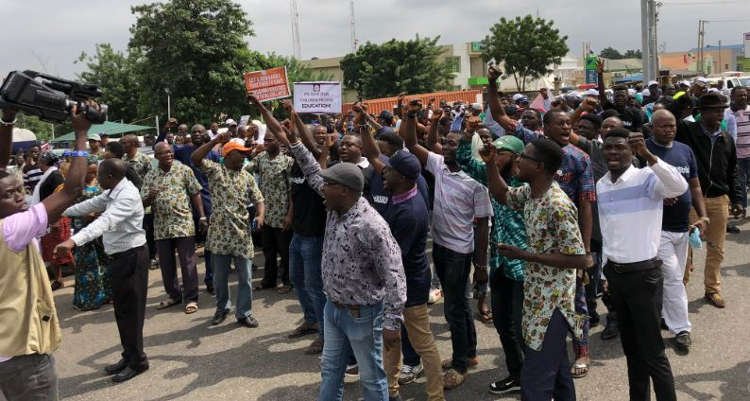
Since 1999, ASUU has embarked on at least 17 nationwide strikes, swallowing more than five full years of academic time. That is an entire degree programme lost to negotiations.
Graduations have been delayed, and life plans suspended, just as parents paid rent and fed children who were supposed to have finished school long ago.
The nine-month strike in 2020 alone wiped out an academic year for many students. Add the strikes of 2013, 2017, 2018, and 2022, and you begin to understand why ‘public university’ now sounds like a gamble.
We have seen this movie before. That is why this moment must be different.
Yes, the 2025 agreement has promising elements such as a 40 percent salary increase, academic tools allowance, and a new Professorial Cadre Allowance aimed at supporting research and slowing the brain drain. On paper, it looks hopeful. In reality, it still lives or dies by implementation.
This time, Nigerians must demand what past deals lacked. Gaps such as clear funding commitments, public timelines, and visible tracking must be addressed.
No more ‘we are working on it’. Budget allocations should be transparent. Progress reports should be public, while implementation should not be a secret known only to ministries and unions.
ASUU has also rightly insisted on university autonomy, better management, and accountability in how funds are used. That means Nigerians should ask for publicly accessible implementation plans, regular updates, and strict consequences for failure.
Students and parents should not be spectators. There should be independent audits, and real monitoring that ensures money meant for universities actually reaches classrooms, laboratories, and libraries.
Above all, this agreement must not be a ceasefire. It must be a reset.
Nigeria’s universities need sustained investment in infrastructure, research, and policy frameworks that connect learning to national development.
Otherwise, we will be back here again, explaining to another generation why their academic calendar has been postponed ‘until further notice’.