


There is growing concern over election credibility as the Independent National Electoral Commission (INEC) is seeking over N873.78 billion for the 2027 general elections, raising urgent questions about what Nigerians are paying for and how delivery will be guaranteed.
Development Diaries reports that INEC recently informed the National Assembly that it requires N873.78 billion to conduct the 2027 general elections.
The agency also demanded N171 billion to fund its operations in the 2026 fiscal year.
According to findings, the N873.78 billion proposed for the 2027 elections is significantly higher than the N313.4 billion released by the Federal Government for the conduct of the 2023 general election.
This is a new public finance test before Nigeria’s democracy.
The real issue is what exactly Nigerians are buying with this money, what performance standard INEC is committing to, and what happens if delivery fails.
Election credibility is now a budget and procurement question, not only a technology question.
INEC’s breakdown shows large spending on operations, technology, logistics, ballot materials, storage of sensitive items, PVC printing, and upgrades to result systems like INEC Result Viewing Portal (IReV).
This makes elections look like a massive procurement project, but without open contracting, unit cost disclosure, and independent verification, Nigerians may again be asked to ‘trust the process’ after paying for it.
Citizens should be able to see which items are single-source, the cost per polling unit, the delivery timelines, and the penalties for failure.
Lawmakers have already warned INEC about the gap between public promises and real performance in 2023, especially around result visibility, because it is a well-known fact that the ‘IReV problem’ was not just technical but also a governance problem.
Hence, if INEC wants more money now, it must clearly publish what will work, where it will work, under what conditions, and how citizens can independently confirm this on election day.
A trillion-naira election must come with a citizen-readable performance contract, not broad assurances.
Furthermore, election funding is also a youth and safety issue.
The request by the National Youth Service Corps (NYSC) for higher allowances for corps members serving as INEC ad hoc staff highlights an equity issue.
These young Nigerians are often posted to difficult and insecure locations and blamed for failures they do not control. If the state depends on them, it must fund their training, insurance, welfare, and security, not just allowances.
This is where citizens and institutions must act. Nigerians should demand the full line-item election budget in machine-readable form, an open contracting process for major procurements, and a published ‘Election Tech and Results Transparency Protocol’ showing upload rules, audit logs, and incident response timelines.
The National Assembly should also tie funding approval to these transparency conditions and written penalties for non-compliance.
The Office of the Auditor-General of the Federation should commit now to a post-election forensic audit. Nigeria does not only need more money for elections but a clear chain of custody for public trust, from procurement to results visibility to accountability when things go wrong.
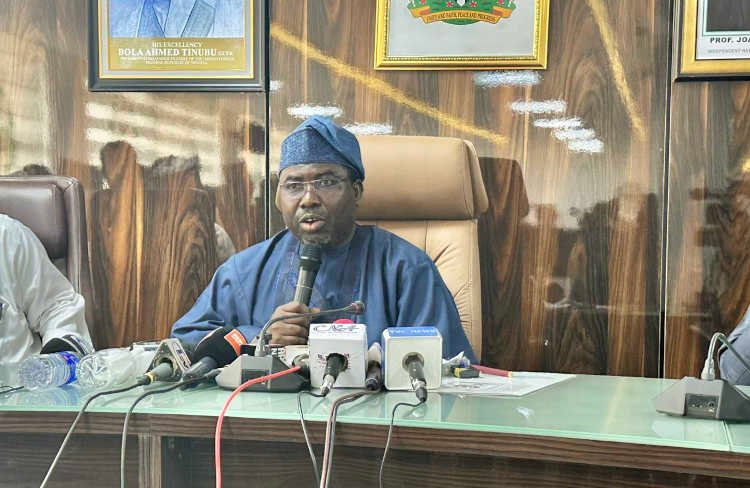
Photo source: INEC Nigeria