





The recent Federation Account Allocation Committee (FAAC) figures showing N6.73 trillion shared with states in just 11 months might sound like a cause for celebration, but before anyone pops champagne, let us remember, this is not really a story about revenue.
Development Diaries reports that the figures show a substantial surge in funds distributed to subnational governments, as they received N6.73 trillion between January and November 2025.
We understand that the figure represents a 29.08 percent increase when compared to the N5.02 trillion FAAC distributed during the same period of 2024.
This is a story about accountability and how much of that money actually reaches schools, health centres, roads, and local communities.
Nigerian states received more cash than ever, yet citizens are still paying for missing teachers, empty clinics, and broken water pumps.
The system that should turn money into services is failing because, as budgets are approved and funds are released, there is often no clear link between what is allocated and what is delivered.
Local government allocations, meant to help communities directly, get trapped in state-controlled accounts. Citizens have almost no way to oversee spending, and the transparency that should guide these inflows is mostly absent. In short, millions are flowing, but development is not.
Who is responsible?
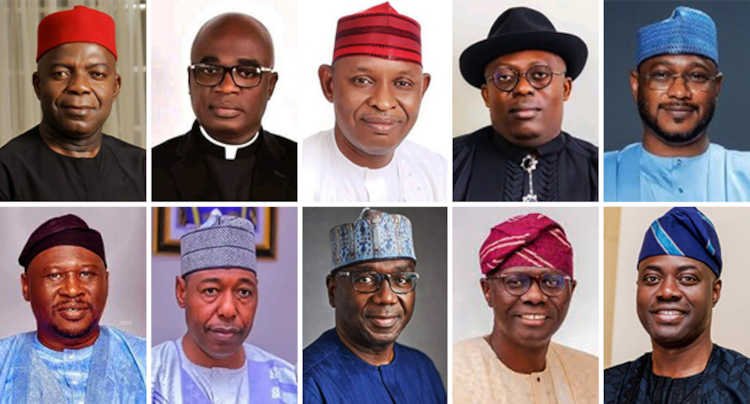
Quite simply, state governors who control the funds, state houses of assembly that approve budgets but rarely check how money is spent, ministries of finance that do not publish clear reports, and federal institutions that hand out money without insisting on results.
When schools lack teachers, hospitals lack drugs, and roads remain impassable despite record FAAC inflows, the people in power have failed in their duty to the citizens.
The numbers are staggering. Monthly allocations are regularly above N500 billion, peaking above N720 billion, with oil-producing states benefiting the most thanks to the 13 percent derivation principle.
But has any of that wealth translated into better services? Sadly, no, with women and girls disproportionately affected, as collapsed health centres, unsafe schools, and broken water systems hit them first and hardest.
Rural communities and persons with disabilities are often left invisible, showing that money alone does not guarantee equity or inclusion.
Governors, here are some questions you cannot ignore: How much of your FAAC allocation actually went to education, health, and water? How much reached local governments directly? Where are the public spending reports?
Silence on these questions is itself an answer. Citizens deserve to know whether inflows are improving lives, or just fattening overheads and bank accounts.
So what can we do now as citizens?
Demand that your state government publish a simple FAAC spending breakdown for 2025. Call for town halls where commissioners explain how money was used.
You can also file requests under the Freedom of Information Act for state and local government spending reports. Track your schools, health care centres, and roads to see if funds match results, and when it is election time, vote with memory, not promises.
Government institutions, including ministries, departments, parastatals, and agencies, must also step up. State assemblies should hold public hearings, while state governments must publish quarterly citizen-friendly reports.
The federal government should tie allocations to minimum service delivery benchmarks, and anti-corruption agencies must audit states that receive huge inflows but deliver little to the people.
Civil society and the media can no longer just report figures, they must track real impact, asking the hard questions and holding leaders accountable for translating money into development that citizens can see and feel.
Until we do this, celebrating N6.73 trillion is just clapping at smoke while citizens walk barefoot through potholes.
Photo source: Channels TV

