






The federal government’s recent claim of disbursing N330 billion to poor Nigerians through its cash transfer programme has drawn sharp scrutiny from civil society, with calls for greater accountability and transparency.
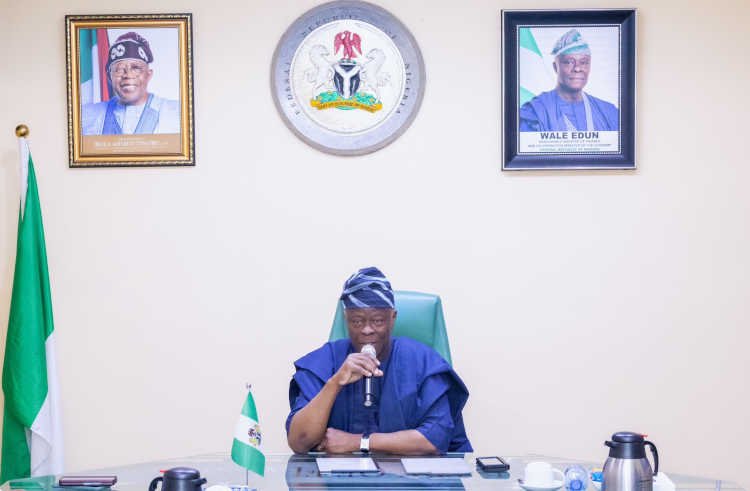
Development Diaries reports that the Minister of Finance and Coordinating Minister of the Economy, Wale Edun, recently announced that the federal government has disbursed a total of N330bn to 8.1 million households across the country under the National Social Safety Net Programme.
According to the minister, this is aimed at cushioning the harsh effects of economic reforms on Nigeria’s poorest and most vulnerable citizens.
This was after a review meeting of the Special Presidential Panel on Social Investment, inaugurated by President Bola Tinubu in February.
In reaction to this, the Human and Environmental Development Agenda (HEDA Resource Centre) has warned that without clear evidence of beneficiaries and disbursement records, the announcement risks sounding more like political rhetoric than a credible poverty alleviation effort.
According to a statement signed by its Chairman, Olanrewaju Suraju, HEDA, while acknowledging the need for social protection in the wake of biting inflation and removal of fuel subsidy, argued that the government’s pronouncement lacked the clarity and openness expected in the management of public resources.
‘Nigerians deserve to know the true identities of the beneficiaries, the selection process adopted by the government, and a transparent breakdown of the amounts paid.
‘Public funds, whether sourced locally or from international partners’ loans like the World Bank, must be utilised with ultimate openness’, Suraju stated.
Nigeria is currently grappling with record inflation, deepening food insecurity, and the effects of subsidy removal, making social protection initiatives critical for millions of households.
However, civil society leaders argue that figures alone are not enough. ‘Who got what, how, and where?’ remains the key question.
It is important to note that past interventions, ranging from fertiliser subsidies to COVID-19 palliatives, were plagued by discrepancies between official claims and citizens’ realities, leaving a legacy of distrust and suspicion.
HEDA is urging the federal government to publish a verifiable list of beneficiaries, the selection process, and amounts disbursed across locations.
Such openness, the group argues, would not only assure Nigerians that funds are reaching the intended vulnerable groups but also allow for independent monitoring by civil society and international partners.
With the programme backed by an $800 million World Bank facility, accountability is even more critical, as future generations will bear the repayment burden if the funds fail to achieve their intended purpose.
In a period of economic hardship, Nigerians deserve proof that cash transfers are delivering real relief, not another episode in the country’s long-standing pattern of opaque public spending.
This is the moment for government to demonstrate that social protection can truly work for the poor.