






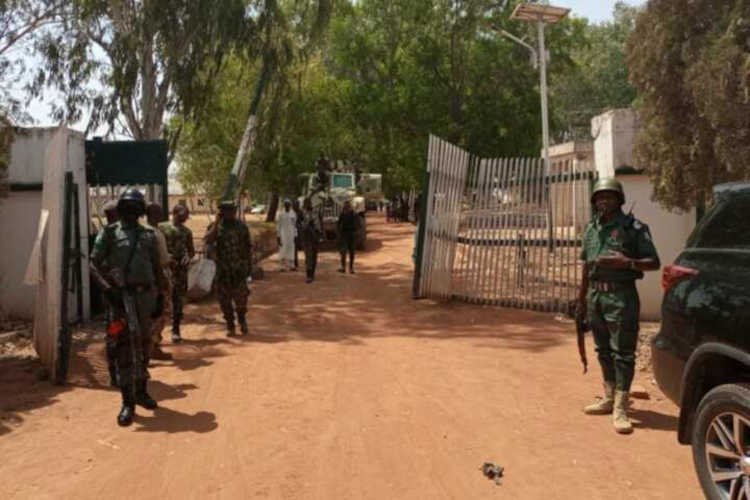
How many more lives must be disrupted, how many villages emptied, and how much ransom paid before Nigeria admits that kidnapping has become a full-blown industry?
Development Diaries reports that according to a new report by SBM Intelligence, between July 2024 and June 2025, 4,722 people were abducted in 997 incidents, with criminals collecting at least N2.57 billion in ransom out of a demanded N48 billion.
The SBM Intelligence report shows that kidnapping in Nigeria is no longer random violence but a steady business.
Even more worrying is that kidnappers demanded about N48 billion, showing how bold and organised these groups have become. When criminal groups can plan, negotiate, and collect money at this scale, it reflects deep failures in security control and governance.
The human cost is severe. The report recorded 762 deaths linked to banditry and related attacks within the same period.
Entire communities have been attacked, with villages emptied and victims forced to work on farms and mining sites controlled by criminals.
This level of violence has weakened trust in the state and turned daily life into survival. No economy can grow where citizens fear roads, farms, schools, and even their homes.
Regionally, the figures show a clear imbalance. The northwest accounted for over 42 percent of kidnapping incidents and more than 62 percent of victims, with Zamfara State alone recording 1,203 abducted persons.
In contrast, the southwest recorded just 5.3 percent of incidents. This gap points to uneven security presence, large ungoverned rural spaces, and long-standing armed networks operating with little resistance.
It also shows that insecurity is not inevitable; where the state is present, crime reduces.
This situation demands firm action from President Bola Tinubu, the National Security Advisor, the Nigeria Police Force, the Department of State Services, the Nigerian Army, and state governors, especially in the northwest and northcentral regions.
Intelligence sharing, proper policing of rural areas, prosecution of kidnappers and their financiers, and support for affected communities must replace repeated statements of concern.
If this trend continues unchecked, Nigeria risks normalising a system where criminals plan better than institutions and citizens pay the price with their lives and livelihoods.