



Nigerians are constantly told that power reform is making progress, but even the seat of power does not trust the national grid.
Development Diaries reports that the federal government plans to spend N1.98 billion on fuelling the State House generators this year, as seen in the 2026 budget proposal.
Nigeria’s power crisis is so deep that even the presidency constantly runs on generators.
This figure, which is the same as last year’s allocation, is a sharp jump from the N67.95 million spent yearly between 2021 and 2023, and N148.26 million in 2024.
If the seat of power cannot rely on the national grid, it is clear that electricity reform is not working at the highest level. Nigerians should stop accepting progress stories based on big budgets and instead demand proof of real, steady power delivery.
This failure is even more worrying when placed beside the villa solarisation project. The government budgeted ten billion naira for it last year and another seven billion naira this year, yet diesel spending has not reduced.
Nigerians should demand a public explanation on how much solar capacity has actually been installed, how many hours of generator use have been replaced, which contractors were paid, and why the project is still not delivering results.
Solar projects that do not reduce diesel use are not transitions; they are expensive decorations. And the continued diesel budget also shows that the government has no clear deadline to end generator dependence, even at the State House.
This sends a bad signal to the rest of the country that, from 2020 to 2022, power sector budgets rose by 129.42 percent, from N133.48 billion to N306.23 billion.
In 2024 alone, N418.37 billion was budgeted, and last year the Ministry of Power received N2.08 trillion, with N2.07 trillion for capital projects.
Yet the power supply remains unstable, with Nigeria ranked by the World Bank as having one of the worst electricity supplies in Africa. We should now demand results, not repeated spending.
The crisis is also bleeding businesses dry, as many businesses are shutting down or relocating because they cannot afford diesel and self-generation.
Asking citizens and businesses to pay higher tariffs in this situation, while the presidency itself depends on generators, weakens government credibility. Leadership must show that reliable power is possible before demanding more money from consumers.
In the end, Nigerians must be clear and specific about their demands. Insist that the president and the power minister stop selling reform narratives and publicly admit the failures in electricity delivery.
We need to demand that the presidency, the Ministry of Power, and the Bureau of Public Procurement (BPP) publish a full status report on the villa solar project, showing capacity installed, funds released, contractors engaged, timelines missed, and why diesel use remains unchanged, and set a firm, non-negotiable deadline to end generator dependence at the State House.
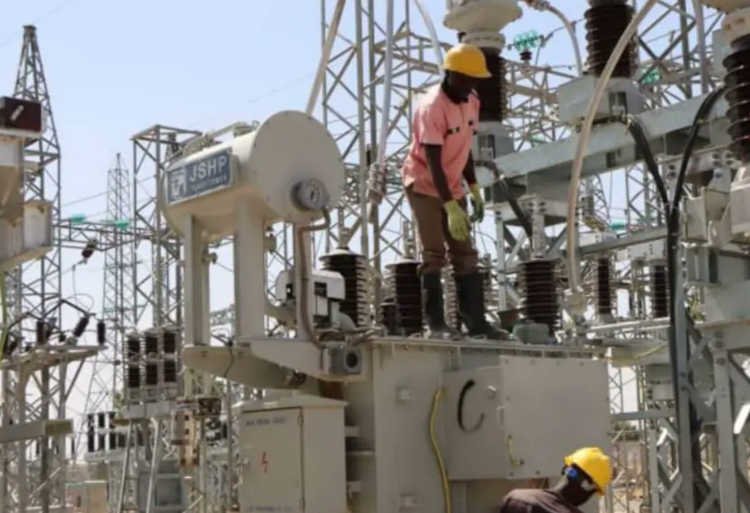
Nigerians should also require the Ministry of Power, Nigerian Electricity Regulatory Commission (NERC), Transmission Company of Nigeria (TCN), and Distribution Companies (DisCos) to publish outcome dashboards, not budget figures, detailing megawatts added, hours of supply improved, feeder stability, and technical losses reduced.
We must call for forensic audits by the Auditor-General of the Federation and the National Assembly into repeated power contracts, demand power-reliability zones for industries through the Ministry of Industry, Trade and Investment, insist that NERC link tariffs strictly to service quality, push for urgent last-mile fixes by DisCos, and require the government to openly acknowledge that generators are Nigeria’s real grid.
These should be followed by a clear, time-bound national plan to finally end diesel dependence.
Photo source: TCN