





The killings in Jos on Palm Sunday, which left over 20 people dead and many others injured, have once again exposed the fragile state of security in parts of Nigeria.
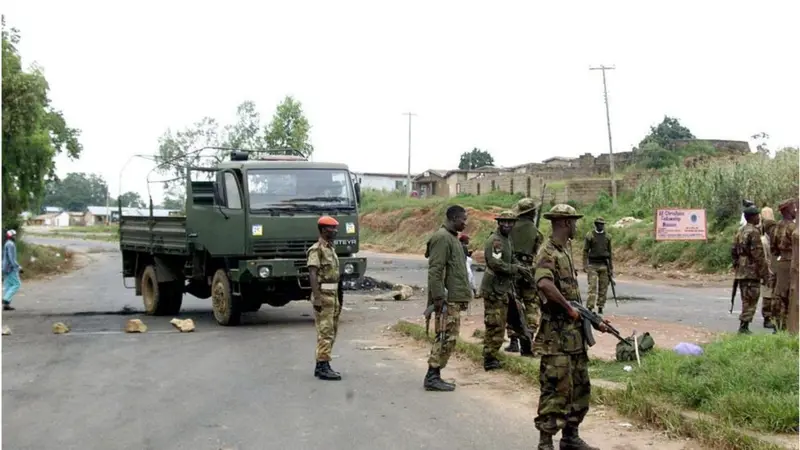
Development Diaries reports that a 48-hour curfew has been imposed in parts of Jos after gunmen opened fire at an open-air bar, with the police confirming the killing of 26 people.
For residents, this is a painful reminder that everyday life can be interrupted at any moment by violence that feels both sudden and familiar.
Plateau State has long been one of Nigeria’s most volatile states, where tensions over land, identity, and access to resources have repeatedly erupted into deadly clashes.
The right to life, the right to safety, and the right to move freely without fear are fundamental protections that every Nigerian is entitled to. These rights are obligations that the government must uphold under national laws and international commitments.
So, when people are killed in such circumstances, it signals a breakdown in the very systems designed to guarantee these rights.
The responsibility for this failure sits with President Bola Tinubu. As commander-in-chief, the president holds ultimate responsibility for national security and must ensure that security strategies are both preventive and reactive.
The Plateau State governor, who has rightly condemned the attack, must go beyond statements and ensure that local security architecture is strengthened to protect vulnerable communities, while security agencies, including the police and the military, are responsible for intelligence gathering, rapid response, and sustained presence in high-risk areas.
When threats are reportedly circulating before attacks and violence still occurs, it raises serious questions about whether intelligence is being effectively acted upon.
But beyond immediate response, there is a deeper governance challenge that continues to fuel such crises. Conflicts over land and resources, especially between farming and herding communities, have lingered for years without a sustainable resolution.
This is where institutions responsible for conflict management, land administration, and community engagement must step in more effectively, because when these underlying issues are left unresolved, violence becomes cyclical, predictable, and tragically normalised.
The impact of such violence is not evenly felt, as women and girls often bear the hidden burden, facing displacement, loss of livelihoods, and increased vulnerability to exploitation in the aftermath of attacks.
Young people, many of whom are already navigating unemployment and uncertainty, are further exposed to trauma or even drawn into cycles of violence, while persons with disabilities are often left behind during emergencies, struggling to access safety, healthcare, and support.
Moments like this demand accountability and action. Citizens must begin to ask hard questions and insist on clear answers.
What specific steps are being taken to prevent a recurrence of such attacks? What intelligence was available before the incident and how was it handled? What measures are in place to protect communities once the curfew is lifted?
Citizens should also demand transparency in investigations and insist that those responsible are not only identified but prosecuted.
At the same time, government institutions must act with urgency and coordination. Security agencies must strengthen intelligence systems and ensure a timely response to threats.
Until safety is treated as a right that must be protected at all costs, rather than a privilege that comes and goes, stories like this will continue to repeat themselves. And that is a reality Nigeria can no longer afford to accept.
Photo source: Getty Images

