





The claim that Nigerians would get special work visas in Japan briefly sparked hope among young people desperate to escape economic stagnation, only to collapse under the weight of denial from Tokyo.
Development Diaries reports that the Japanese government has denied the Nigerian government’s claim of a newly created visa category allowing skilled Nigerians to relocate to the Asian country.
In a statement issued on 21 August, 2025, the Nigerian government claimed that under the Japan International Cooperation Agency (JICA), Nigerian citizens could benefit from a special dispensation visa to work in Japan.
However, the Japanese Ministry of Foreign Affairs, in a statement, made it clear that there is no special visa, no golden bridge, not even a bronze pathway for Nigerians to work in Japan under the new JICA Africa Hometown initiative.
Instead, the programme is simply about cultural and community exchanges.
For Nigerians, this comes across as more than an international embarrassment: a continuation of a troubling pattern in which official statements collapse under the weight of fact-checking.
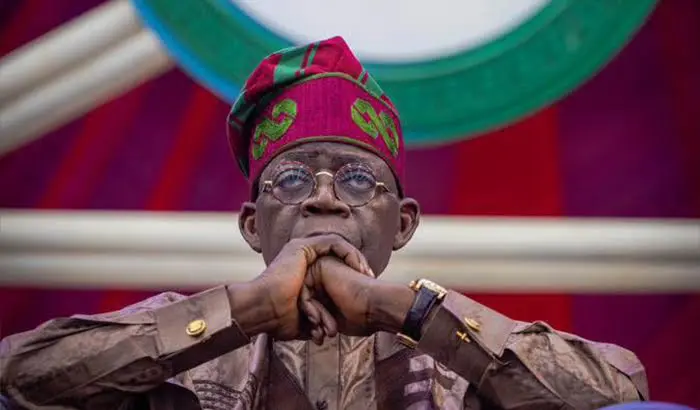
Recall the President Bola Tinubu administration’s early claim that the petrol subsidy had been entirely removed, only for the government to quietly admit months later that subsidy payments had never really gone away.
Another piece of ‘information acrobatics’ was the premature victory laps over the supposed stabilisation of the naira, which were quickly undercut by another spiral of devaluation. Even foreign investors were once misled about the scale of new capital inflows that later turned out to be largely recycled announcements.
These are precedents that reveal a culture of communication where spin comes first and truth lags.
And the deeper cost of this habit is measured in terms of trust, especially in a democracy where trust serves as the bridge between government and citizens.
When misinformation becomes routine, that bridge collapses, and each false announcement drives citizens further away from participating in governance. Why should anyone attend town halls, cast ballots, or engage in policy debates when even government’s most basic claims cannot be believed?
It seems the president’s communications aides are trapped in a ritual of desperation to defend the government at all costs, fact-check later, and never apologise.
In fact, it has become a theatre of misplaced loyalty, where public relations is confused with public deception.
And come to think of it, if ordinary citizens face penalties for sharing fake news, should government officials who mislead millions with official stamps of authority escape responsibility?
Accountability must start from the top, and it must start now.
The president’s media and communications handlers, including Bayo Onanuga, must openly acknowledge this misinformation scandal and apologise to Nigerians without resorting to jargon or half-truths because nothing restores dignity faster than honest admission.
In addition, President Tinubu needs to publicly distance himself from this damaging communication culture by reading the riot act to his aides, making it clear that reckless announcements are not an extension of his leadership. Without that assurance, silence risks being read as complicity.
More importantly, the presidency must demonstrate that this will not be business as usual. Officials who misinform the public cannot continue to enjoy impunity; credibility cannot coexist with carelessness.
If this administration genuinely intends to rebuild the bond of trust with its people, then accuracy and accountability must become the minimum standard, not a negotiable luxury.