



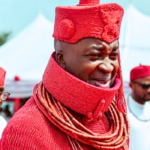


The wife of Nigeria’s president, Aisha Buhari, has denied posting on her social media pages a false press release on the extension of the deadline for the validity of old naira notes.
Development Diaries reports that Mrs Buhari said the press release, which has been debunked by the Central Bank of Nigeria (CBN), was posted by hackers on her Instagram and Facebook pages.
The statement that appeared to be from the CBN claimed that the apex bank has directed the recirculation of the old naira notes until May.

After the denial from the apex bank, Mrs Buhari quickly deleted the post, blaming it on the work of hackers.
The spread of misinformation has become a common thing in Nigeria, and with the approaching 2023 elections, this menace has witnessed a rise.
This is one of the major reasons the Nigerian government has been planning to regulate the social media space and provide a heavier punishment for purveyors of misinformation and disinformation.
Though not an excuse, it can be easily overlooked if an average Nigerian had shared the false press release, not the wife of the president.
With this development, does it mean that pieces of information are not verified before they are shared on Aisha Buhari’s social media platforms?
Social media, while it has its positive use, also has its negative outcomes. For example, cyberbullying, invasion of privacy, cyberstalking, and misinformation and disinformation can all be seen as negative effects of social media.
While false reports can be described as fabricated stories that are curated and shared without credible evidence just for the purpose of misinforming people, Nigerians need to understand that spreading misinformation has its consequences.
Section 15, subsection one of the Nigeria Cyber Crime Act 2015 provides that anyone found deliberately sharing communication with an intent to cause annoyance, inconvenience or anxiety to another is liable to a fine of N2,000,000 or imprisonment.
Another instance of the spread of misinformation can be cited with the arrest of the Director of Special Projects and New Media, All Progressives Congress Presidential Campaign Council, Femi Fani-Kayode.
Fani–Kayode had alleged that some top military officers met with the presidential candidate of the Peoples Democratic Party (PDP), Atiku Abubakar, and were plotting to carry out a coup.
He posted the information on his verified Twitter handle but failed to verify the authenticity of the information, leading to his interrogation by the Department of State Services (DSS).
Development Diaries, therefore, calls on Nigerians to be reminded or note the dangers of spreading misinformation or disinformation on social media.
That action is a threat to peace, order and stability in a nation, hence Nigerians should be wary of what they consume and share on social media, as there are consequences.
Photo source: Aisha Muhammadu Buhari